
Europe is home to some of the world’s most enchanting medieval towns, where ancient castles, cobblestone streets, fortified walls, and centuries-old architecture transport visitors back in time. From picturesque Alpine villages to dramatic Mediterranean fortresses, these historic destinations offer a fascinating glimpse into Europe’s rich cultural heritage.
Imagine wandering through narrow streets lined with colorful half-timbered houses, exploring magnificent Gothic cathedrals, or watching the sunset over medieval towers that have stood for hundreds of years. Across the continent, countless towns have preserved their historic charm while embracing modern life.
While famous destinations such as Bruges in Belgium and Rothenburg ob der Tauber in Germany attract travelers from around the world, many equally remarkable medieval towns remain relatively undiscovered.
Whether you’re planning a romantic European getaway, a cultural adventure, or a journey through history, these destinations promise unforgettable experiences.
In this guide, we’ll explore the 25 most beautiful medieval towns in Europe, highlighting their fascinating history, architectural treasures, breathtaking landscapes, and unique attractions.
1. Gruyères, Switzerland – A Fairytale Village in the Swiss Alps
Nestled among rolling green hills and the majestic peaks of the Swiss Alps, Gruyères is one of Switzerland’s most charming medieval villages.
Located in the canton of Fribourg, this picturesque hilltop destination combines beautifully preserved architecture, spectacular mountain scenery, and traditional Swiss culture.
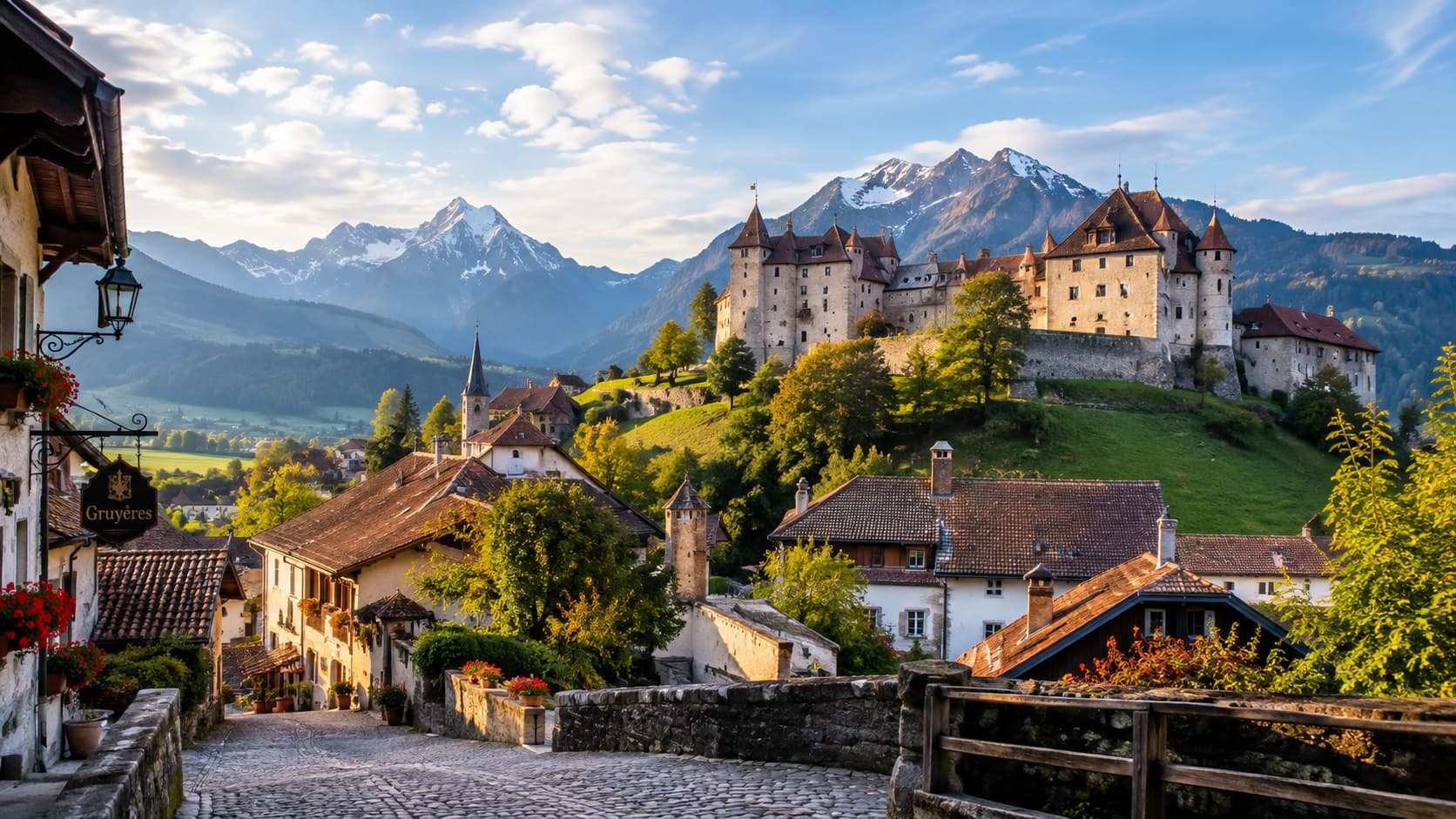
The village’s historic center features cobblestone streets, traditional stone buildings, and peaceful squares that create an atmosphere reminiscent of medieval Switzerland.
Unlike larger tourist destinations, Gruyères maintains a relaxed and welcoming character, making it ideal for travelers who want to experience authentic Swiss village life.
The most impressive landmark is Gruyères Castle, a magnificent 13th-century fortress overlooking the surrounding countryside. Visitors can explore its historic rooms, admire fascinating art collections, and enjoy panoramic views of the Alpine landscape.
Gruyères is also internationally famous for its cheese-making traditions. The region produces the celebrated Gruyère cheese, and visitors can discover traditional production methods while sampling delicious local specialties.
Beyond the village, scenic walking trails lead through lush meadows, peaceful countryside, and beautiful mountain landscapes.
With its medieval architecture, rich culinary heritage, and breathtaking Alpine setting, Gruyères deserves a place among the most beautiful medieval villages in Europe.
2. Hallstatt, Austria – A Magical Lakeside Village
Few places in Europe capture the imagination quite like Hallstatt.
Located in Austria’s spectacular Salzkammergut region, this picturesque lakeside village is surrounded by towering Alpine mountains and the crystal-clear waters of Lake Hallstatt.
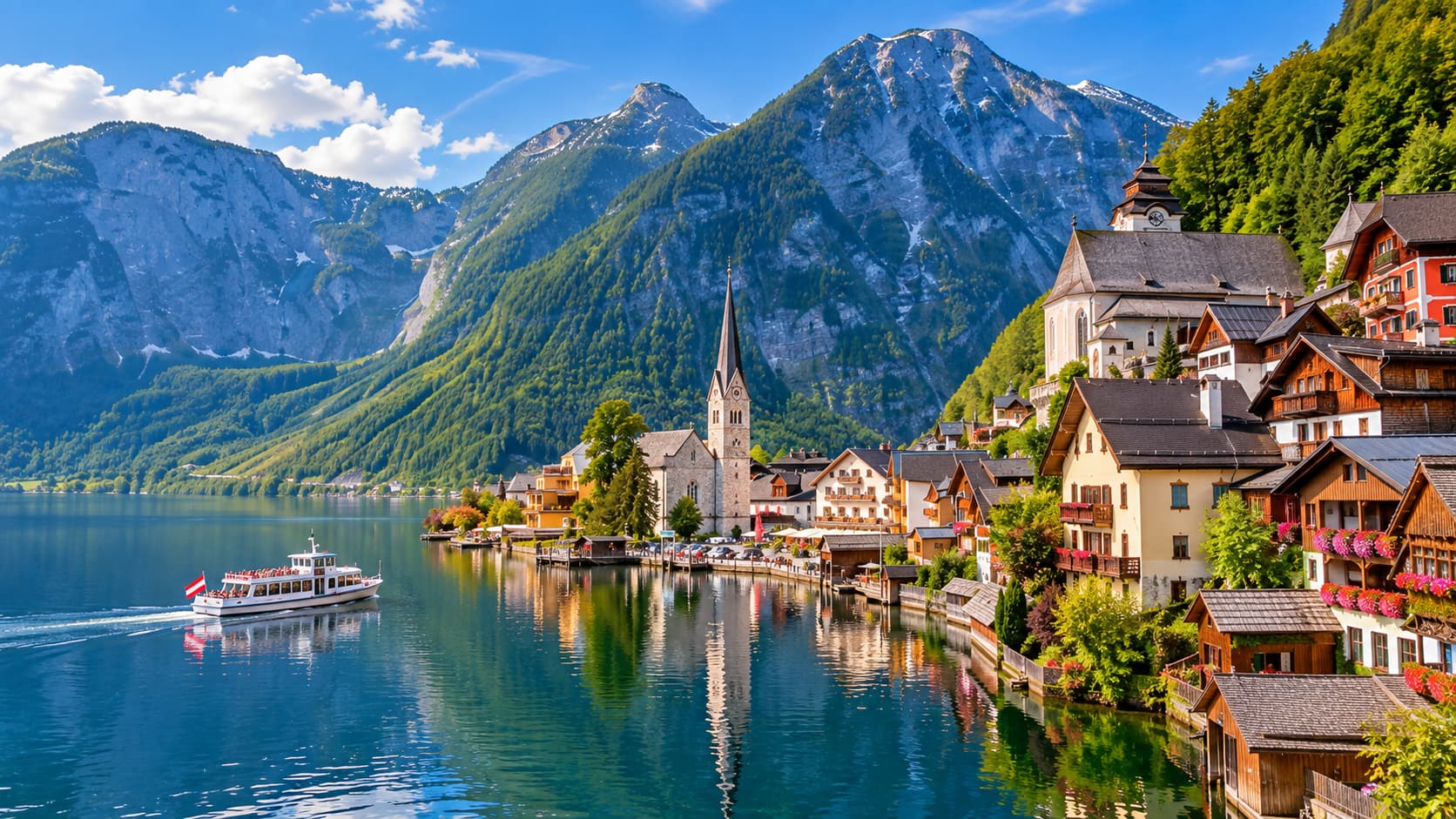
Traditional wooden houses climb the steep mountainside, while the elegant church tower rises above the peaceful waterfront. Together, they create one of Austria’s most recognizable landscapes.
Although Hallstatt is best known for its postcard-perfect scenery, its history stretches back thousands of years.
The nearby Hallstatt Salt Mine reveals the importance of salt mining to the region’s development and offers fascinating insights into ancient European civilization.
Walking through the village’s narrow streets, visitors will discover flower-covered balconies, charming cafés, traditional Austrian houses, and scenic viewpoints overlooking the lake.
A boat trip across Lake Hallstatt provides another unforgettable perspective, especially during the early morning when mist floats above the water.
Every season brings a different atmosphere. Autumn transforms the surrounding forests into brilliant shades of gold and orange, while winter blankets the village in snow.
Combining natural beauty, ancient history, and timeless architecture, Hallstatt remains one of the most beautiful historic villages in Europe.
3. Conques, France – A Medieval Pilgrimage Village
Hidden within the beautiful countryside of southern France, Conques is a remarkable medieval village known for its Romanesque architecture and religious heritage.
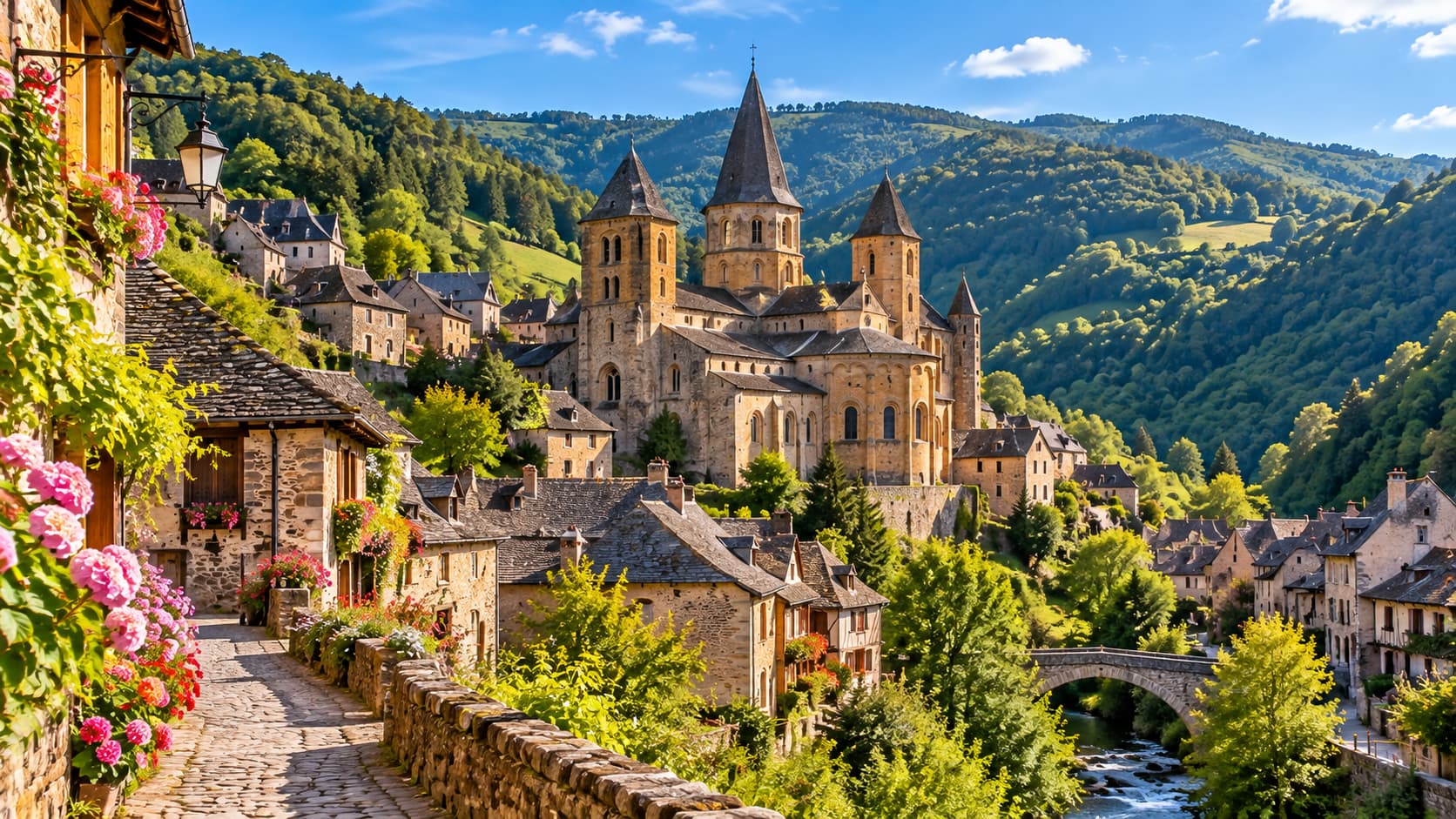
Located in the Aveyron region, this small settlement has preserved much of its medieval appearance, offering visitors an authentic journey into the past.
For centuries, Conques has been an important stopping point along the pilgrimage routes to Santiago de Compostela.
Its most famous landmark is the Abbey Church of Sainte-Foy, an architectural masterpiece celebrated for its magnificent Romanesque sculptures.
Above the entrance, an extraordinary tympanum depicting the Last Judgment features intricate medieval carvings illustrating heaven, hell, and biblical figures.
Inside the abbey, visitors can admire the remarkable golden reliquary of Sainte-Foy, decorated with precious stones and exquisite craftsmanship.
Contemporary stained-glass windows designed by artist Pierre Soulages create a striking contrast with the ancient stone interior.
Beyond the abbey, Conques offers a maze of narrow cobblestone lanes, half-timbered houses, traditional slate roofs, and charming stone archways.
Visitors can also enjoy regional French cuisine, including aligot and traditional Aveyron lamb dishes.
With its peaceful atmosphere, exceptional architecture, and centuries-old pilgrimage traditions, Conques is one of France’s most fascinating medieval treasures.
4. Dinant, Belgium – A Spectacular Riverside Town
Set between towering limestone cliffs and the tranquil waters of the Meuse River, Dinant is one of Belgium’s most picturesque historic towns.
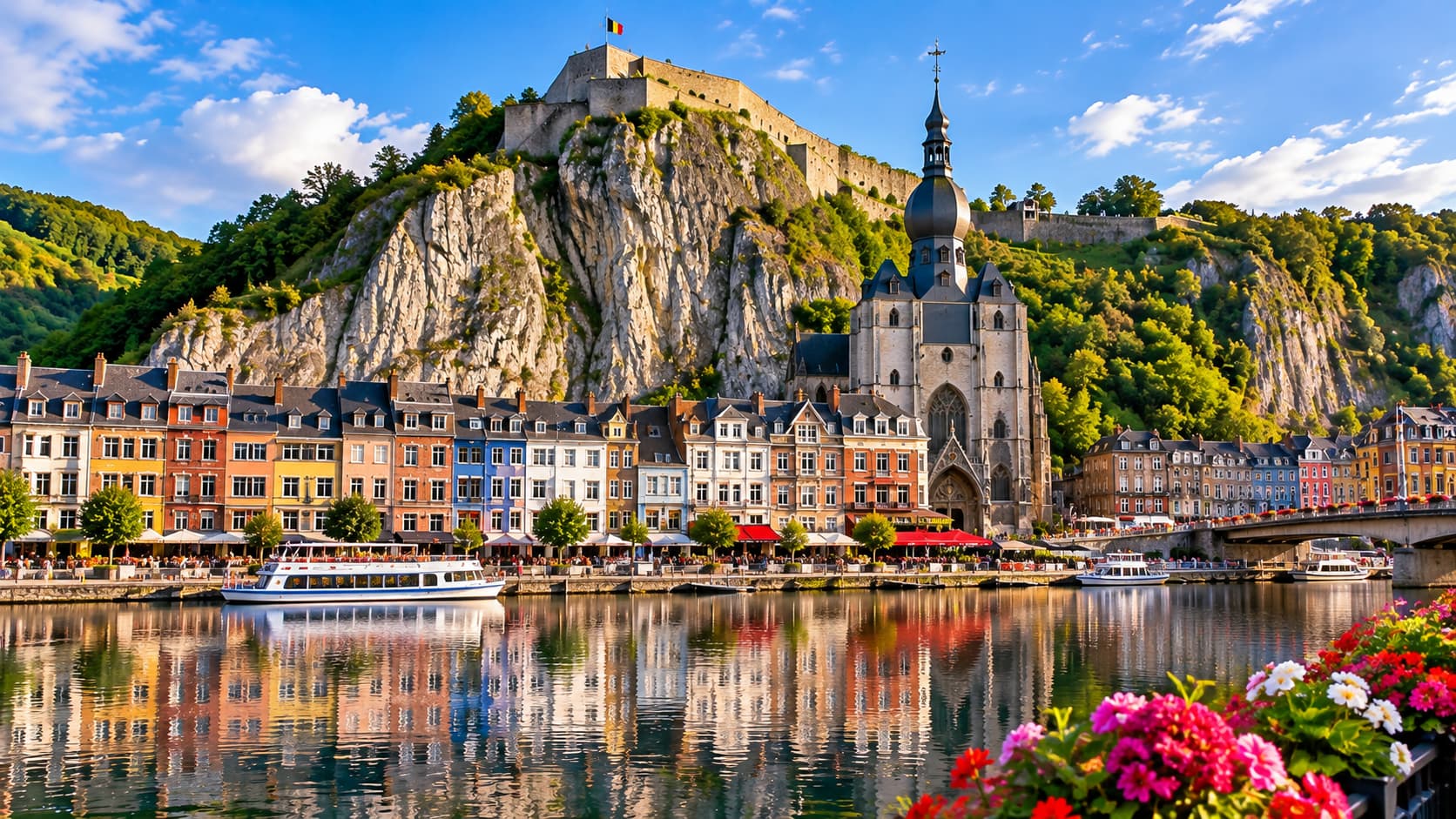
Located in the Wallonia region, Dinant combines dramatic natural scenery with impressive architecture and fascinating cultural heritage.
The town’s skyline is dominated by the beautiful Collegiate Church of Notre-Dame, famous for its distinctive onion-shaped bell tower.
Rising above the church is the imposing Citadel of Dinant, a historic fortress overlooking the Meuse Valley.
Visitors who reach the citadel are rewarded with spectacular panoramic views of the river, colorful buildings, and surrounding countryside.
One of the best ways to appreciate Dinant’s beauty is by taking a boat cruise along the Meuse River. These journeys reveal dramatic rock formations, charming riverside scenery, and breathtaking views of the town.
Dinant is also famous as the birthplace of Adolphe Sax, the inventor of the saxophone.
Colorful saxophone sculptures displayed throughout the town celebrate this unique musical heritage.
The surrounding region offers additional attractions, including caves, castles, scenic hiking trails, and beautiful viewpoints.
For travelers seeking a combination of medieval history, natural beauty, and riverside charm, Dinant is an unforgettable European destination.
5. Toledo, Spain – The Historic City of Three Cultures
Perched dramatically above the Tagus River, Toledo is one of Spain’s most historically significant cities.
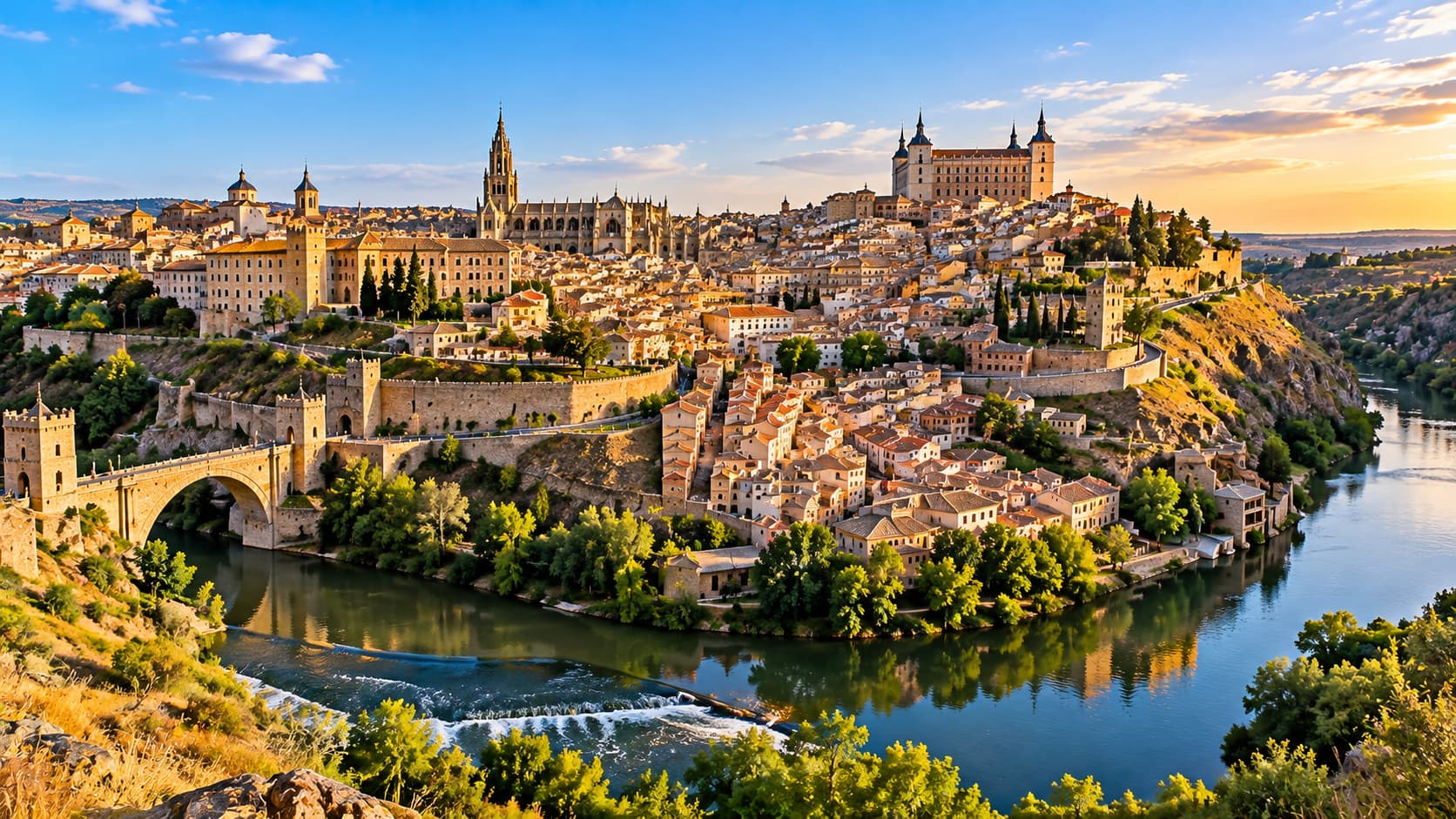
Known as the City of Three Cultures, Toledo reflects the influence of Christian, Muslim, and Jewish communities that shaped its extraordinary architectural and artistic heritage.
Once the capital of Spain, the city preserves a remarkable medieval center filled with ancient walls, winding streets, Gothic churches, and historic monuments.
Its historic city is recognized as a UNESCO World Heritage Site.
The magnificent Toledo Cathedral dominates the skyline. Construction began in the 13th century, and the cathedral remains one of Spain’s finest examples of Gothic architecture.
Inside, visitors can admire elaborate religious artworks, impressive altarpieces, and masterpieces by the famous painter El Greco.
Toledo’s historic Jewish Quarter contains two remarkable synagogues: Santa María la Blanca and El Tránsito, the latter home to the Sephardic Museum.
Other important attractions include the Monastery of San Juan de los Reyes and the imposing Alcázar fortress.
The city’s narrow streets are also famous for traditional craftsmanship, including Toledo steel swords and intricate damascene jewelry.
Visitors should not miss local specialties such as marzipan and traditional Castilian roasted meats.
For the most atmospheric experience, consider staying overnight when the daytime crowds disappear and Toledo’s medieval streets become peaceful.
6. Colmar, France – A Romantic Medieval Town in Alsace
Surrounded by the vineyards of northeastern France, Colmar is one of Europe’s most romantic historic towns.
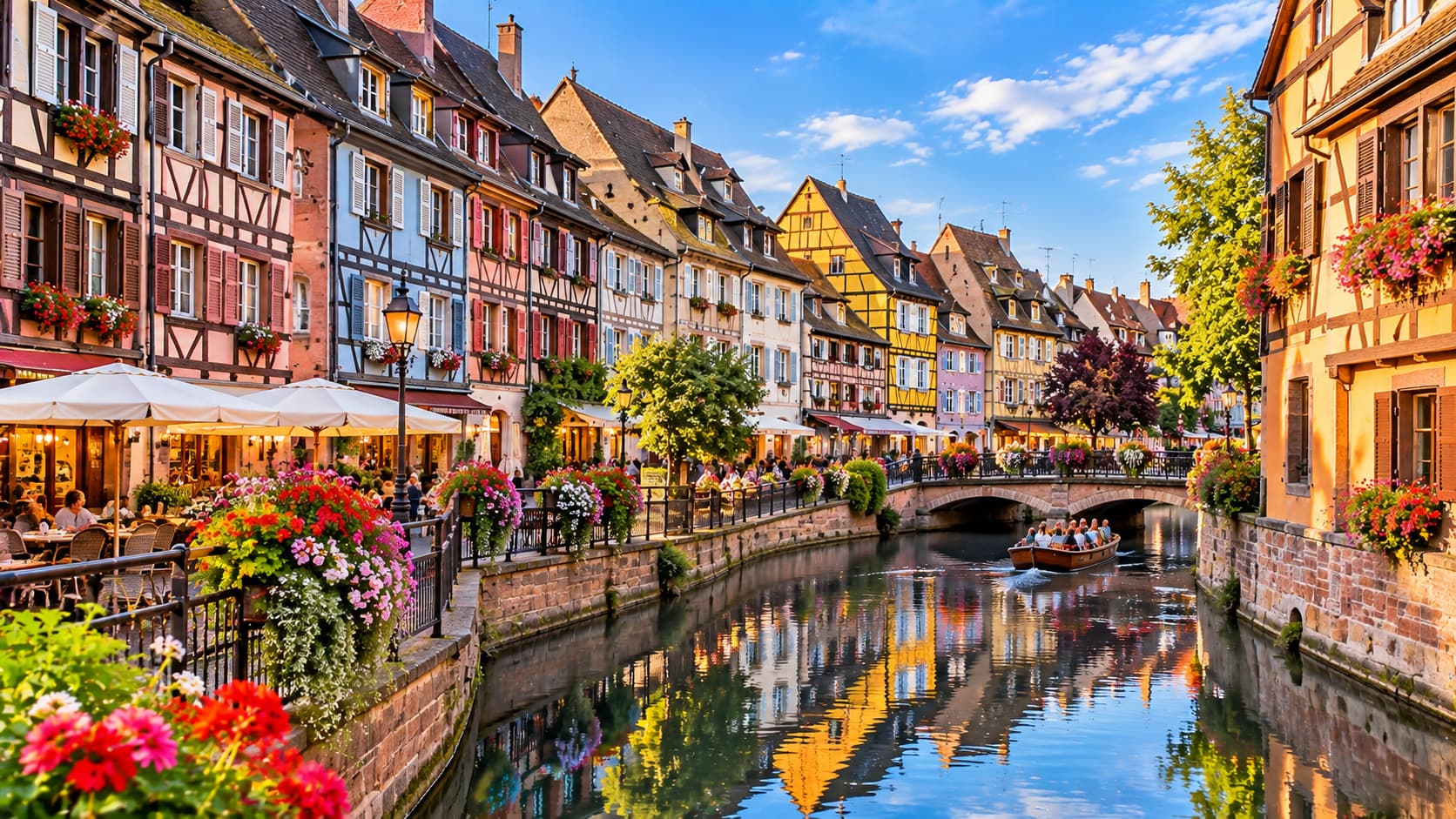
Located in the Alsace region, Colmar is famous for its colorful half-timbered houses, charming canals, and distinctive blend of French and German cultural influences.
The beautifully preserved old town is filled with narrow cobblestone streets, pastel-colored buildings, traditional wooden details, and flower-decorated balconies.
Every corner offers another picturesque scene, from quiet courtyards to lively squares lined with inviting cafés.
The town’s most famous neighborhood is La Petite Venise, or Little Venice.
Here, peaceful canals wind past historic houses and waterfront restaurants, creating one of the most photographed settings in France.
A boat ride through the district provides a relaxing way to admire the architecture and colorful reflections on the water.
Colmar also serves as an excellent starting point for exploring the Alsace Wine Route, where vineyards, traditional villages, and beautiful countryside stretch across the region.
During winter, Colmar transforms into a magical Christmas destination, with festive markets, sparkling lights, and seasonal decorations filling the historic streets.
With its romantic atmosphere, charming canals, and rich Alsatian traditions, Colmar is among the best medieval towns to visit in France.
7. Visby, Sweden – A Medieval Treasure on Gotland Island
Located on the Swedish island of Gotland, Visby is one of Scandinavia’s best-preserved medieval towns.
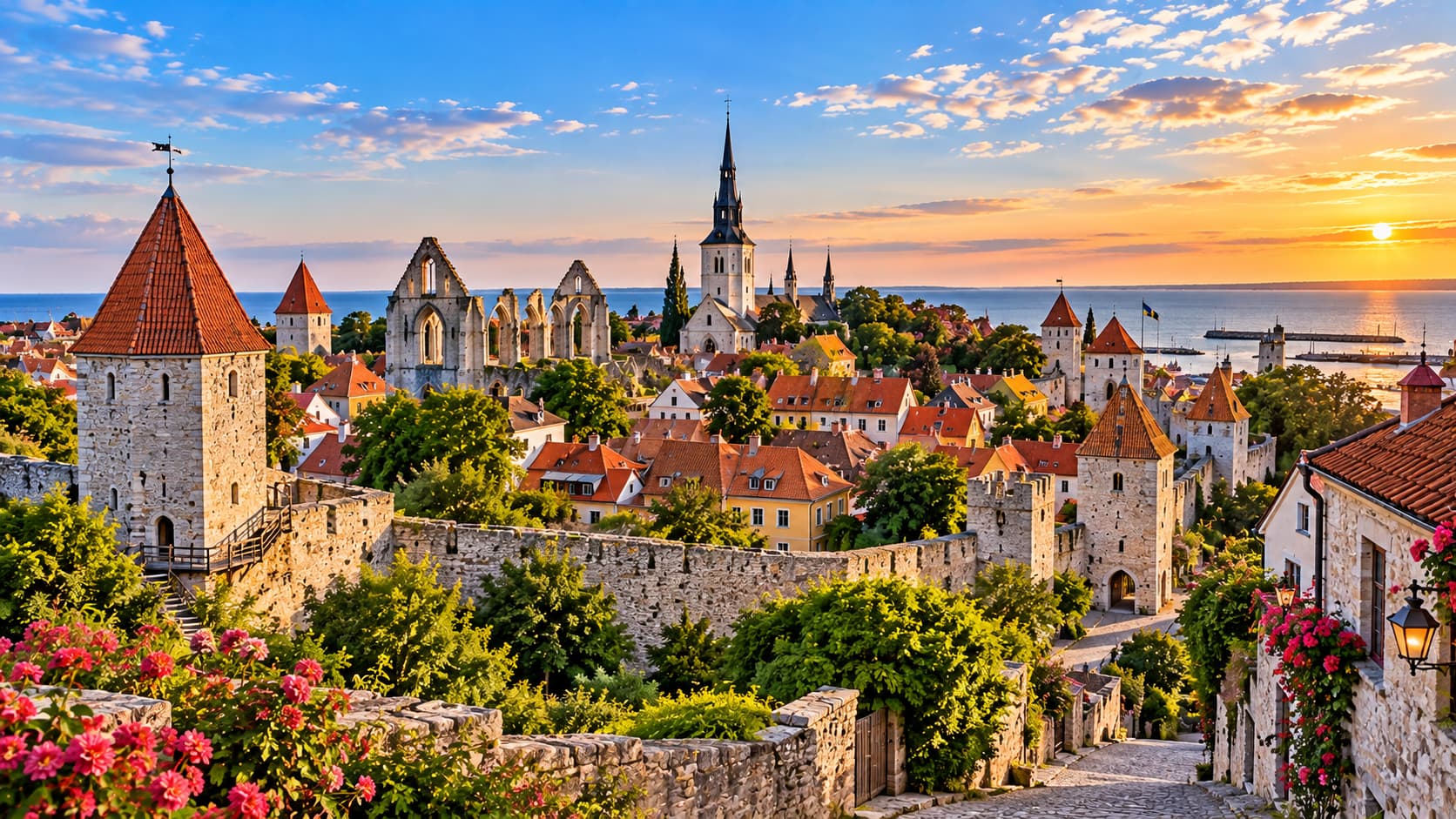
This UNESCO World Heritage Site was once a prosperous Hanseatic trading port, and its remarkable architecture reflects the wealth and importance of medieval Baltic commerce.
Visby’s historic center is surrounded by approximately 3.4 kilometers of medieval defensive walls dating largely from the 13th century.
The walls, gates, and towers create an impressive reminder of the town’s strategic importance.
Walking along the historic fortifications offers beautiful views across red-tiled rooftops, the Baltic Sea, and Gotland’s countryside.
One of Visby’s most fascinating features is its collection of medieval church ruins.
Roofless Gothic churches, ancient stone arches, and atmospheric courtyards provide unique settings for cultural events and concerts.
St. Mary’s Cathedral remains an important landmark, displaying architectural elements from different historical periods.
The old town is filled with historic merchant houses, cobblestone streets, traditional squares, and charming buildings decorated with climbing roses.
Every August, Visby hosts Medieval Week, when costumed participants, historical markets, and reenactments bring the town’s medieval past to life.
With its extraordinary fortifications and authentic atmosphere, Visby is one of the most captivating historic destinations in Northern Europe.
8. Sibiu, Romania – The Medieval Heart of Transylvania
Situated in the heart of Transylvania, Sibiu is one of Romania’s most elegant historic cities.
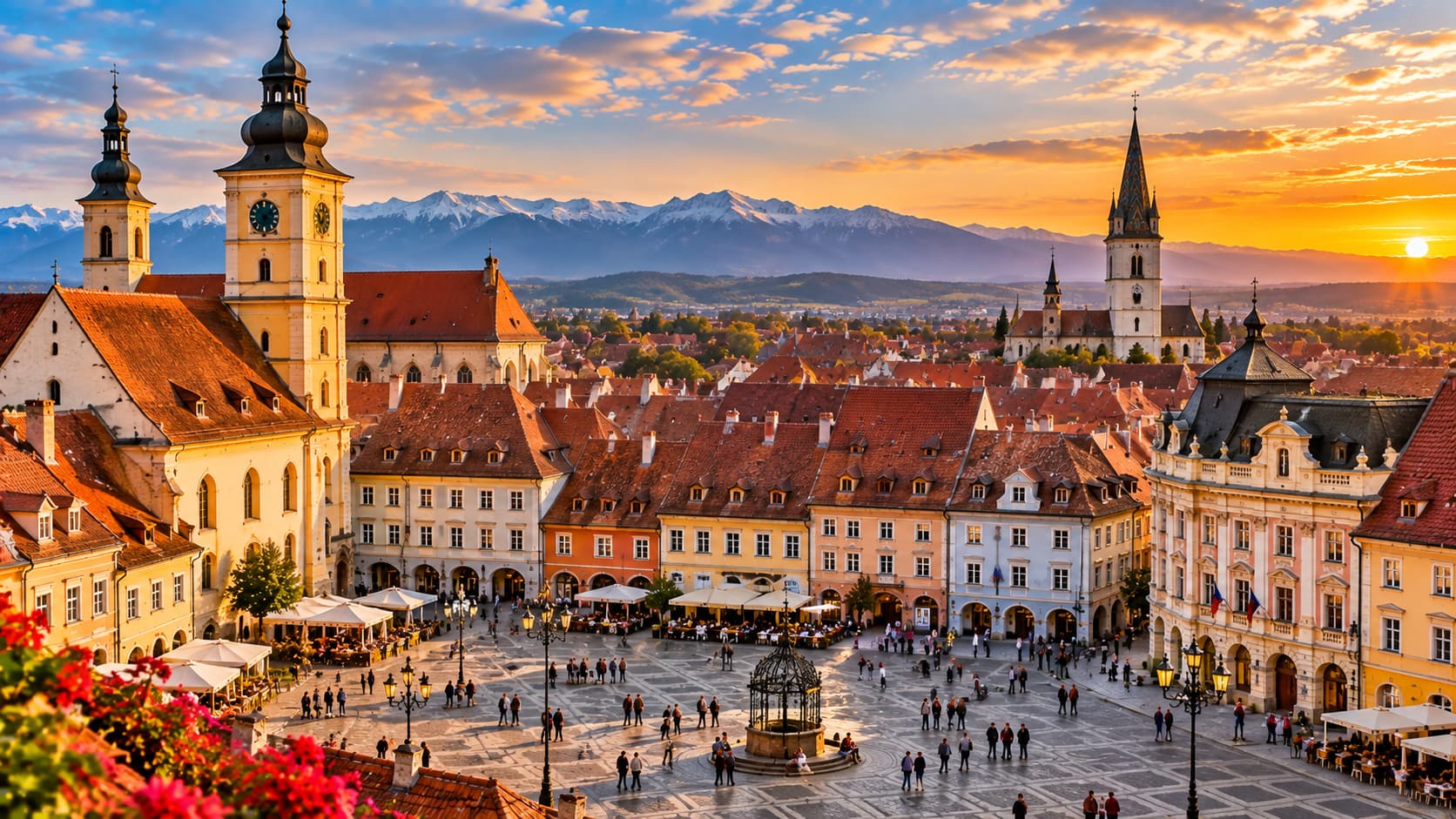
Founded and developed by Saxon settlers, Sibiu features beautifully preserved medieval architecture, colorful merchant houses, and impressive fortified squares.
The city was named a European Capital of Culture in 2007, reflecting its importance as a cultural destination.
At the center of Sibiu lies Piața Mare, the Great Square, surrounded by historic buildings with distinctive roof windows that resemble watching eyes.
These unusual architectural features have become one of the city’s most recognizable symbols.
Nearby, Brukenthal Palace houses an important art museum, while the Council Tower offers panoramic views across the historic rooftops.
Another famous landmark is the Bridge of Lies, surrounded by local legends and centuries of history.
Sibiu’s medieval defensive system includes historic towers associated with different craft guilds, such as the Carpenters’ Tower and Potters’ Tower.
Visitors can explore the city’s upper and lower districts, connected by picturesque passages and cobblestone stairways.
The Lutheran Cathedral of Saint Mary adds another impressive Gothic landmark to the historic center.
Today, Sibiu combines medieval charm with lively cafés, cultural festivals, traditional Transylvanian cuisine, and popular Christmas markets.
Its surrounding countryside also offers Saxon fortified churches, traditional villages, and beautiful hiking opportunities.
9. Èze, France – A Dramatic Medieval Village Above the Mediterranean
Perched high above the Mediterranean Sea, Èze is one of the most spectacular medieval villages on the French Riviera.
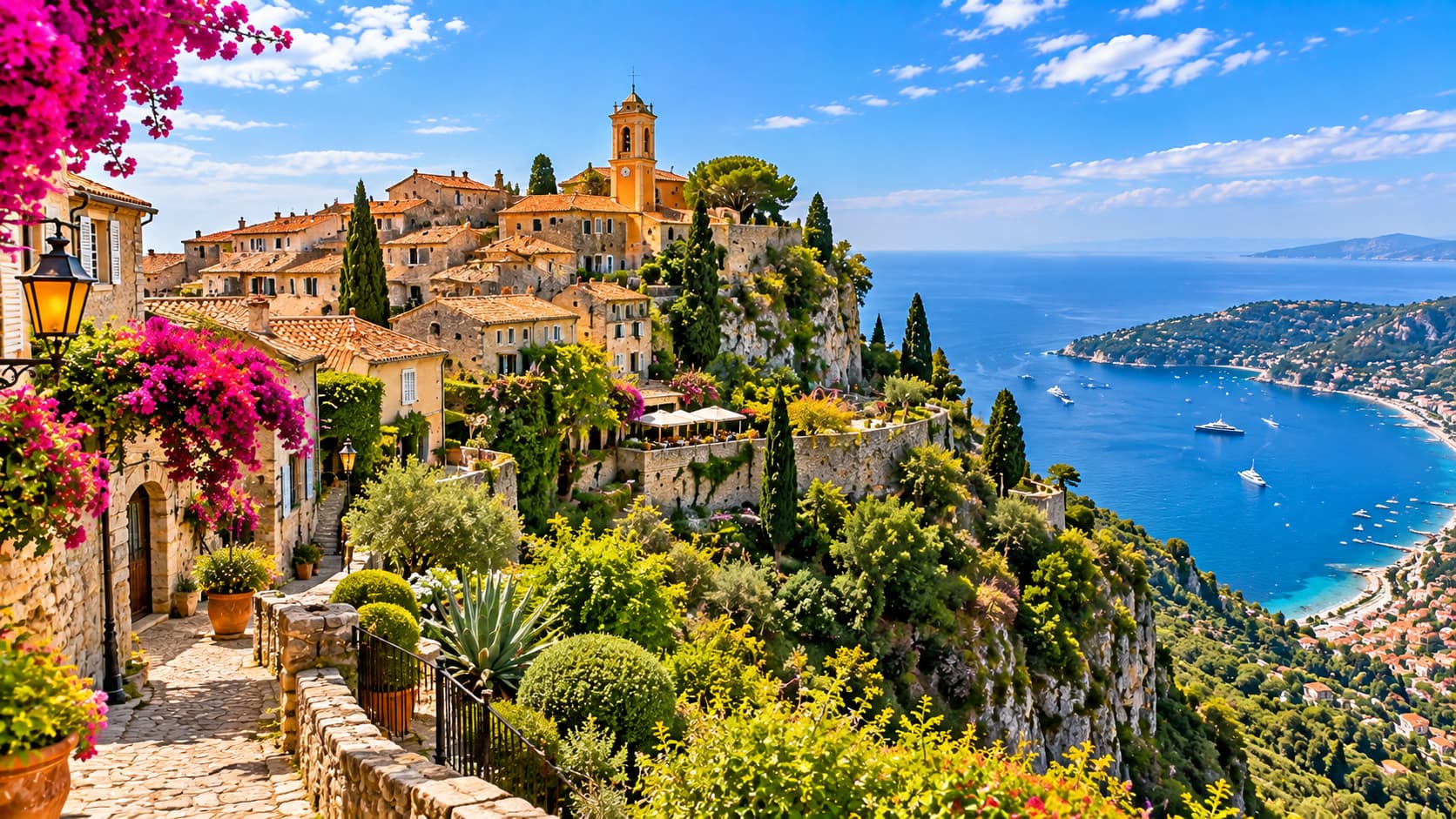
Located between Nice and Monaco, this historic hilltop settlement is famous for its dramatic cliffside position and breathtaking coastal views.
The village rises approximately 427 meters above sea level, creating panoramic scenery that stretches across the beautiful Côte d’Azur.
Visitors enter the medieval village through ancient gateways before following steep cobblestone paths between beautifully restored stone houses.
Narrow passageways, vaulted archways, flowering balconies, and hidden courtyards give Èze its unforgettable storybook character.
Art galleries, artisan workshops, and boutique shops occupy many of the historic buildings.
One of the village’s greatest attractions is the Jardin Exotique d’Èze, an exotic garden located near the ruins of the former medieval castle.
Here, visitors can admire unusual cacti and succulent plants while enjoying spectacular Mediterranean views.
The village also features the beautiful Church of Notre-Dame de l’Assomption and traditional perfume-making experiences associated with the region’s famous fragrance industry.
For adventurous travelers, the Nietzsche Path connects the hilltop village with the coast below.
Despite its popularity, Èze retains a magical atmosphere, especially during the late afternoon when golden sunlight illuminates the ancient stone buildings.
10. Óbidos, Portugal – A Romantic Walled Medieval Town
Surrounded by remarkably preserved medieval walls, Óbidos is one of Portugal’s most enchanting historic towns.
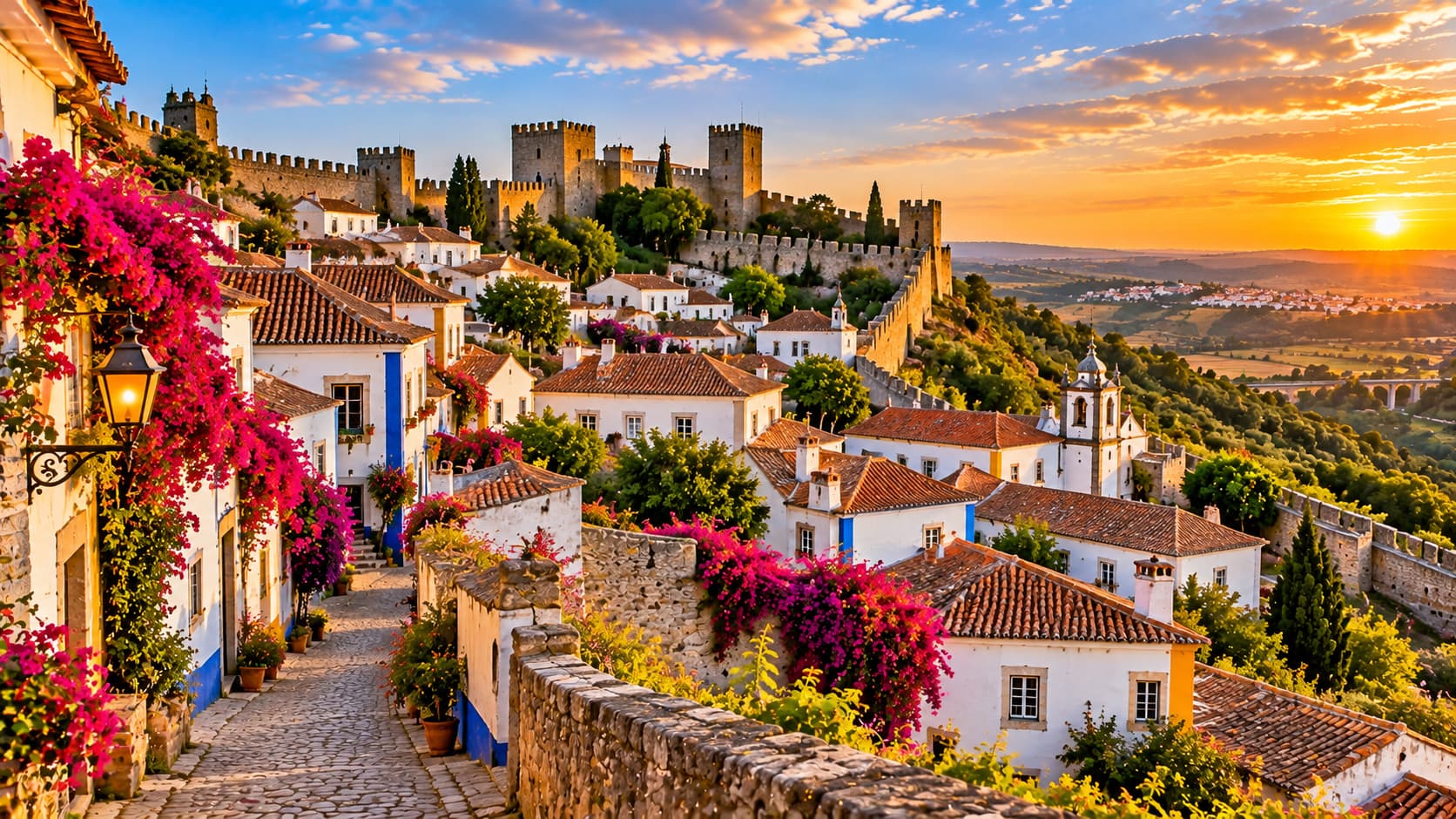
This picturesque hilltop destination is famous for its whitewashed houses, colorful flowers, cobblestone streets, and impressive castle.
Visitors enter the town through the beautiful Porta da Vila gateway, decorated with traditional Portuguese azulejo tiles.
Inside the walls, narrow streets wind between charming houses adorned with bougainvillea and colorful painted details.
Óbidos has a fascinating royal history and was traditionally associated with Portuguese queens.
The town’s medieval fortifications remain one of its most impressive features.
Walking along sections of the castle walls provides sweeping views of the surrounding countryside and red-tiled rooftops, although visitors should exercise caution because some areas lack protective railings.
The medieval castle now houses a historic pousada, allowing guests to experience overnight accommodation within a remarkable heritage setting.
Along Rua Direita, visitors will find traditional craft shops, galleries, restaurants, and local delicacies.
One of the most famous specialties is ginjinha, a Portuguese sour-cherry liqueur often served in small chocolate cups.
The Church of Santa Maria and the town’s historic squares offer additional architectural highlights.
Óbidos also hosts medieval-themed events and has earned recognition as a UNESCO City of Literature.
Its combination of historic architecture, romantic atmosphere, and cultural traditions makes it one of Portugal’s most beautiful medieval towns.
11. Besalú, Spain – A Medieval Jewel of Catalonia
Located in northeastern Spain, Besalú is one of Catalonia’s best-preserved medieval towns.
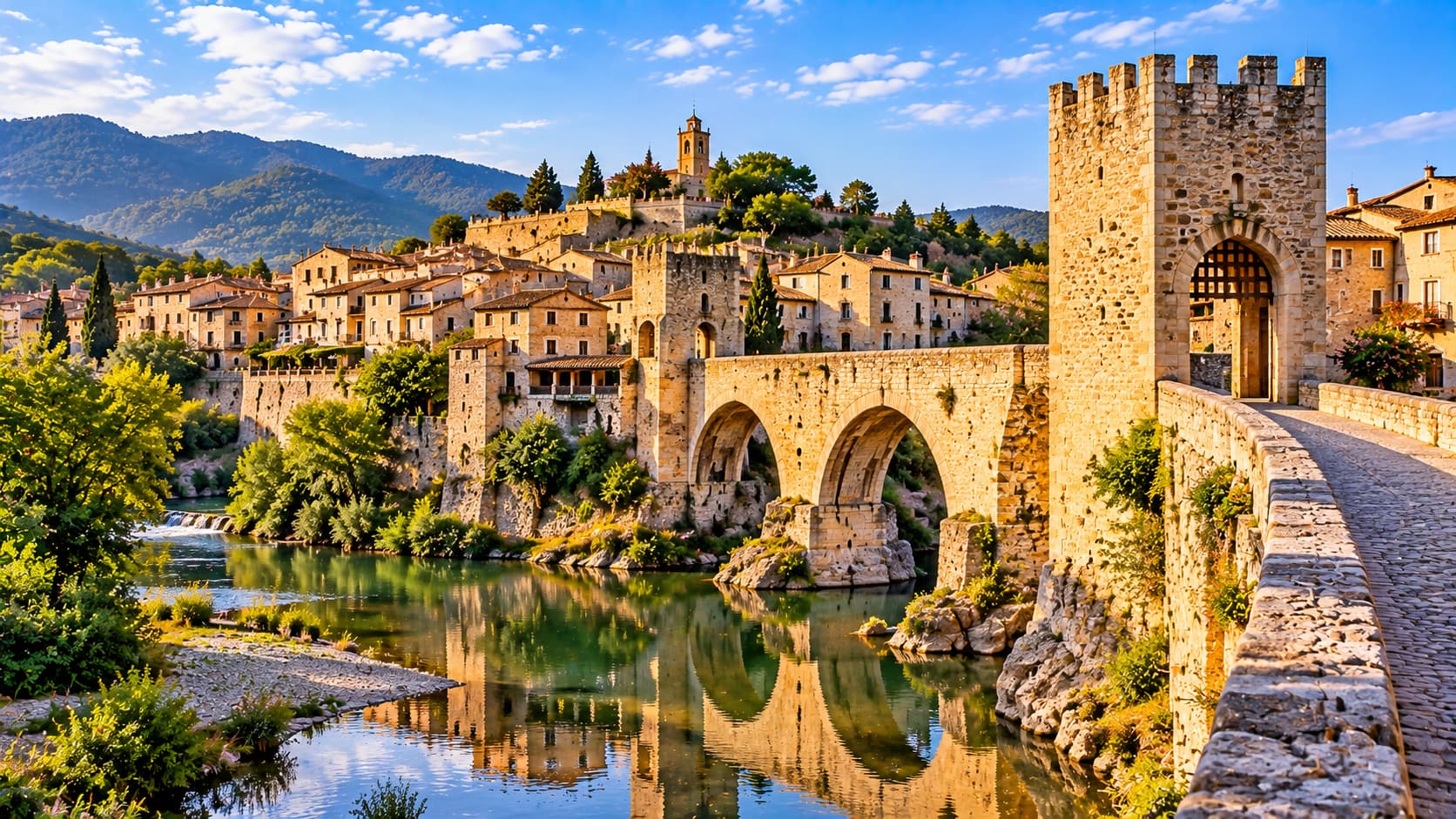
This charming historic settlement is particularly famous for its magnificent fortified stone bridge spanning the Fluvià River.
The bridge, with its distinctive arches and defensive gateway, creates one of the most recognizable medieval scenes in Spain.
Crossing it feels like entering another era, where ancient stone buildings and narrow cobblestone streets preserve the atmosphere of the Middle Ages.
Besalú’s historic center contains beautiful Romanesque churches, medieval arcades, traditional stone houses, and hidden courtyards.
One of its most significant historical attractions is the medieval Jewish ritual bath, known as the mikveh.
Dating from the Middle Ages, this remarkable underground structure offers valuable insight into the town’s once-thriving Jewish community.
The Monastery of Sant Pere is another architectural highlight, featuring impressive Romanesque details and centuries-old stone craftsmanship.
Visitors can also explore the Church of Sant Vicenç and discover charming streets filled with traditional Catalan character.
Local restaurants serve regional specialties in atmospheric medieval buildings.
Located within reach of Girona and the Costa Brava, Besalú makes an excellent day trip, although its peaceful atmosphere also rewards travelers who choose to stay longer.
12. Cochem, Germany – A Fairytale Castle Town on the Moselle River
Nestled along a picturesque bend of the Moselle River, Cochem is one of Germany’s most romantic small towns.
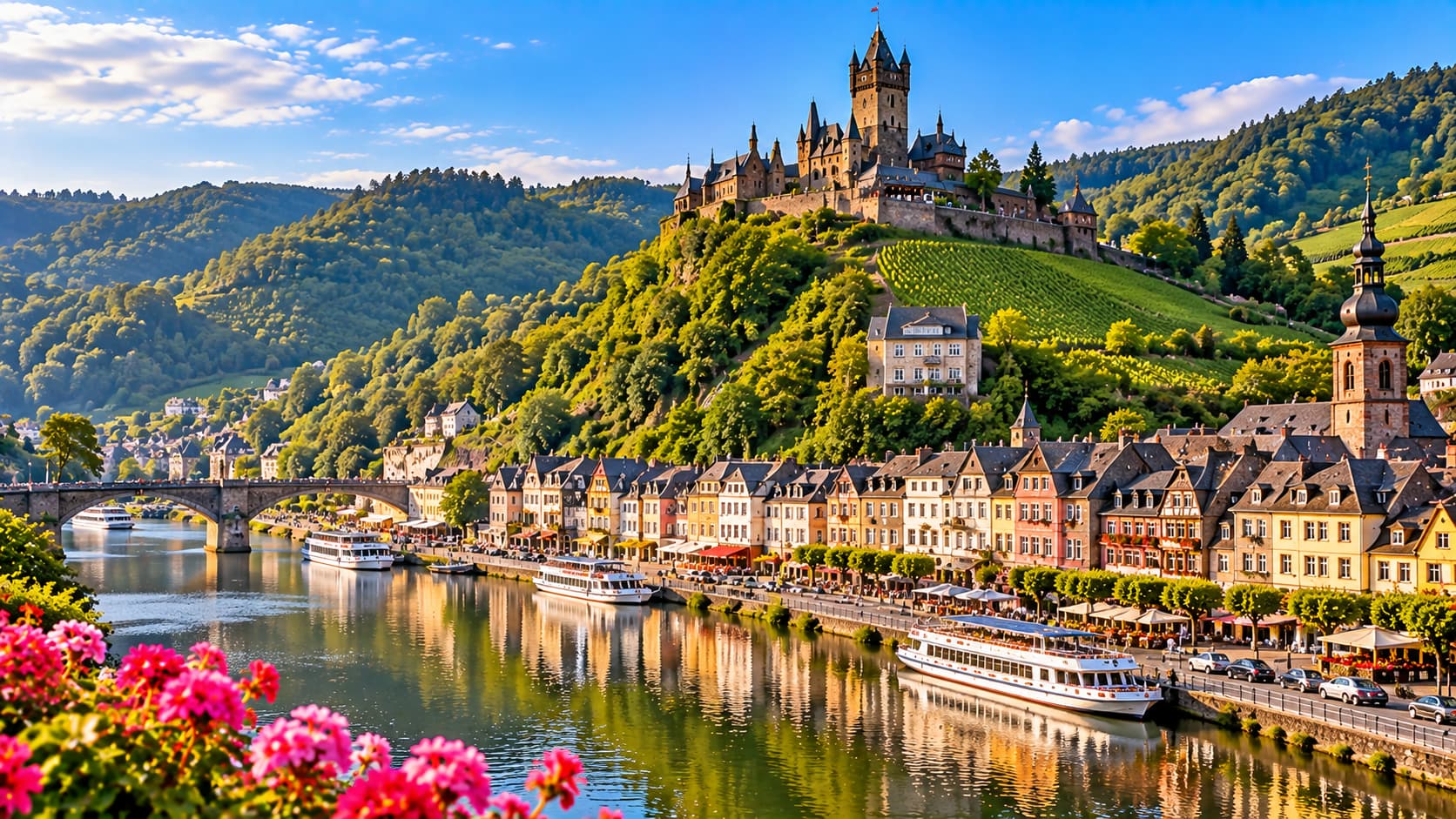
Surrounded by vineyard-covered hills and dominated by a magnificent hilltop castle, Cochem looks like a scene from a European fairytale.
The town’s most famous landmark is Reichsburg Cochem, an impressive castle rising above the river.
Although the castle has medieval origins, much of its present appearance reflects 19th-century reconstruction.
Visitors can explore its historic interiors and admire panoramic views of the Moselle Valley, surrounding vineyards, and colorful town below.
At the foot of the castle, Cochem’s charming old town features narrow cobblestone streets, traditional half-timbered houses, historic squares, and welcoming cafés.
The lively market square is an excellent place to experience the town’s relaxed atmosphere.
Cochem is also famous for its wine-making traditions.
The steep vineyards surrounding the Moselle Valley produce excellent Riesling wines, and visitors can enjoy tastings at local wineries.
A river cruise offers another beautiful perspective of the landscape, passing historic villages, terraced vineyards, and scenic hillsides.
Whether exploring the castle, wandering medieval streets, or enjoying a glass of local wine beside the river, Cochem offers an unforgettable German travel experience.
13. Trogir, Croatia – A Beautiful Medieval Island Town
Located along Croatia’s stunning Dalmatian coast, Trogir is a beautifully preserved medieval town situated on a small island.
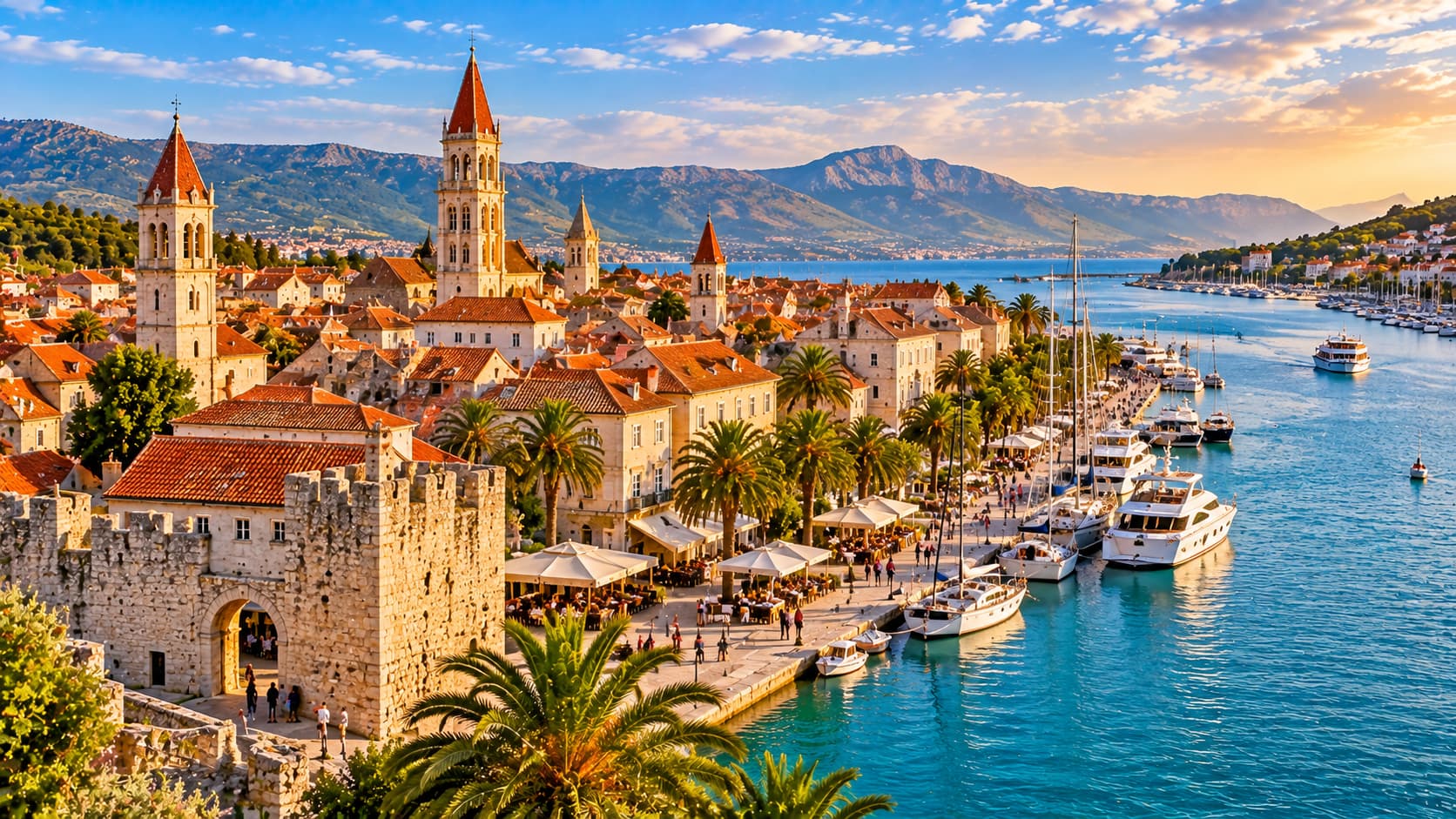
Connected to the mainland by bridges, this UNESCO World Heritage Site is celebrated for its remarkable Romanesque, Gothic, Renaissance, and Baroque architecture.
The historic center is a fascinating maze of narrow stone streets, hidden courtyards, and picturesque squares.
At the heart of the town stands the magnificent Cathedral of St. Lawrence, one of Croatia’s most important historic landmarks.
Its famous Romanesque portal, created by master sculptor Radovan in the 13th century, is an outstanding example of medieval craftsmanship.
Another important attraction is Kamerlengo Fortress, which overlooks the waterfront and offers beautiful views of the surrounding area.
Walking through Trogir’s old town reveals elegant stone palaces, historic churches, and traditional Dalmatian architecture.
The lively waterfront promenade is lined with cafés, restaurants, and boats gently floating in the harbor.
Visitors can enjoy fresh seafood, grilled fish, octopus, and regional Croatian wines while admiring the Adriatic scenery.
Despite its compact size, Trogir offers a remarkable concentration of architectural treasures.
Its beautiful waterfront setting and exceptional preservation make it one of the most charming medieval towns in Croatia.
14. Kotor, Montenegro – A Medieval Town Between Mountains and Sea
Surrounded by towering mountains and the deep blue waters of the Bay of Kotor, Kotor is one of the Adriatic coast’s most spectacular historic destinations.
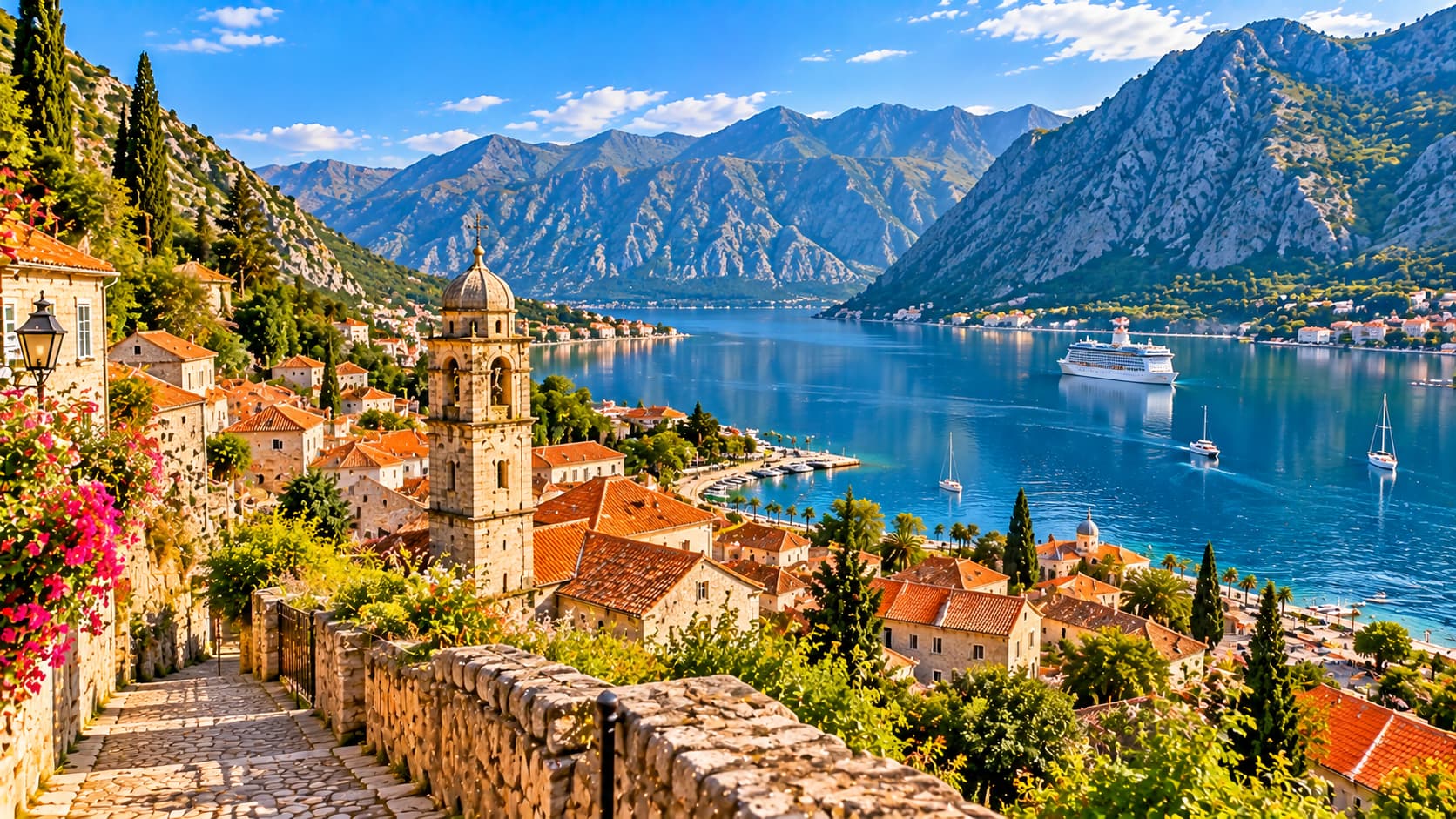
This UNESCO-listed medieval town combines impressive defensive walls, ancient architecture, and dramatic natural scenery.
The historic old town is enclosed by massive stone fortifications that extend upward along the surrounding mountainside.
Inside the gates, visitors discover a labyrinth of narrow cobblestone streets, beautiful squares, historic churches, and centuries-old buildings influenced by Venetian architecture.
One of Kotor’s most famous attractions is the fortress of San Giovanni, also known as St. John’s Fortress.
Reaching the fortress requires a challenging climb along ancient stone steps, but the reward is extraordinary.
From above, visitors can admire the red rooftops of Kotor, the winding bay, and the dramatic mountains rising from the water.
The town’s beautiful waterfront provides opportunities for relaxing walks, scenic boat trips, and traditional Montenegrin dining.
Nearby coastal villages and mountain viewpoints offer even more unforgettable scenery.
As evening arrives, warm lights illuminate the medieval streets and historic walls, creating a magical atmosphere.
With its combination of cultural heritage and breathtaking landscapes, Kotor is undoubtedly one of the most beautiful medieval towns in Europe.
15. Matera, Italy – An Ancient City Carved Into Stone
Located in southern Italy’s Basilicata region, Matera is one of Europe’s most extraordinary historic destinations.
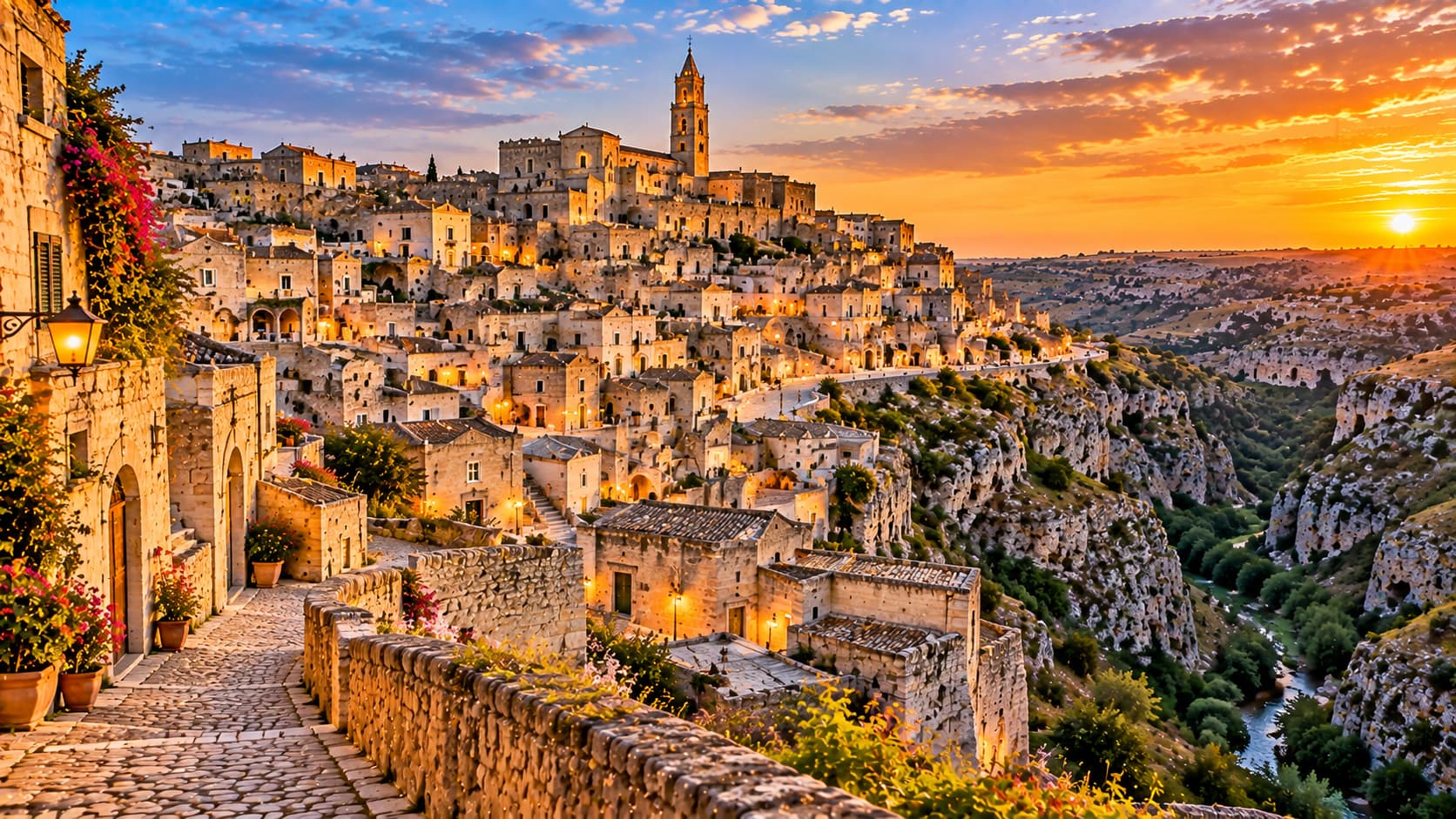
Famous for its ancient cave dwellings and dramatic limestone landscape, Matera offers a fascinating journey through thousands of years of human history.
The city’s most remarkable neighborhoods are the Sassi di Matera, a complex network of cave homes, stone buildings, churches, and narrow streets carved into the rocky hillsides.
The two main districts, Sasso Caveoso and Sasso Barisano, form a spectacular landscape of pale stone structures overlooking a deep ravine.
These dwellings were far more sophisticated than simple caves.
Many included elaborate water collection systems, underground storage areas, and carefully designed living spaces.
Matera is also home to numerous rock-hewn churches decorated with historic religious frescoes.
During the 20th century, the Sassi became associated with severe poverty and poor living conditions, leading to the relocation of many residents.
However, extensive restoration transformed the area into a celebrated cultural destination.
Today, Matera is recognized as a UNESCO World Heritage Site and was named a European Capital of Culture in 2019.
Visitors can stay in beautifully restored cave hotels, explore fascinating museums, and enjoy traditional Basilicata cuisine.
Local specialties include cruschi peppers, caciocavallo cheese, and rustic bread baked using traditional methods.
Matera’s remarkable transformation and unique architecture make it one of the most unforgettable places to visit in Italy.
16. Monemvasia, Greece – A Hidden Byzantine Fortress by the Sea
Rising dramatically from the sea off the southeastern coast of the Peloponnese, Monemvasia is one of Greece’s most remarkable medieval settlements.
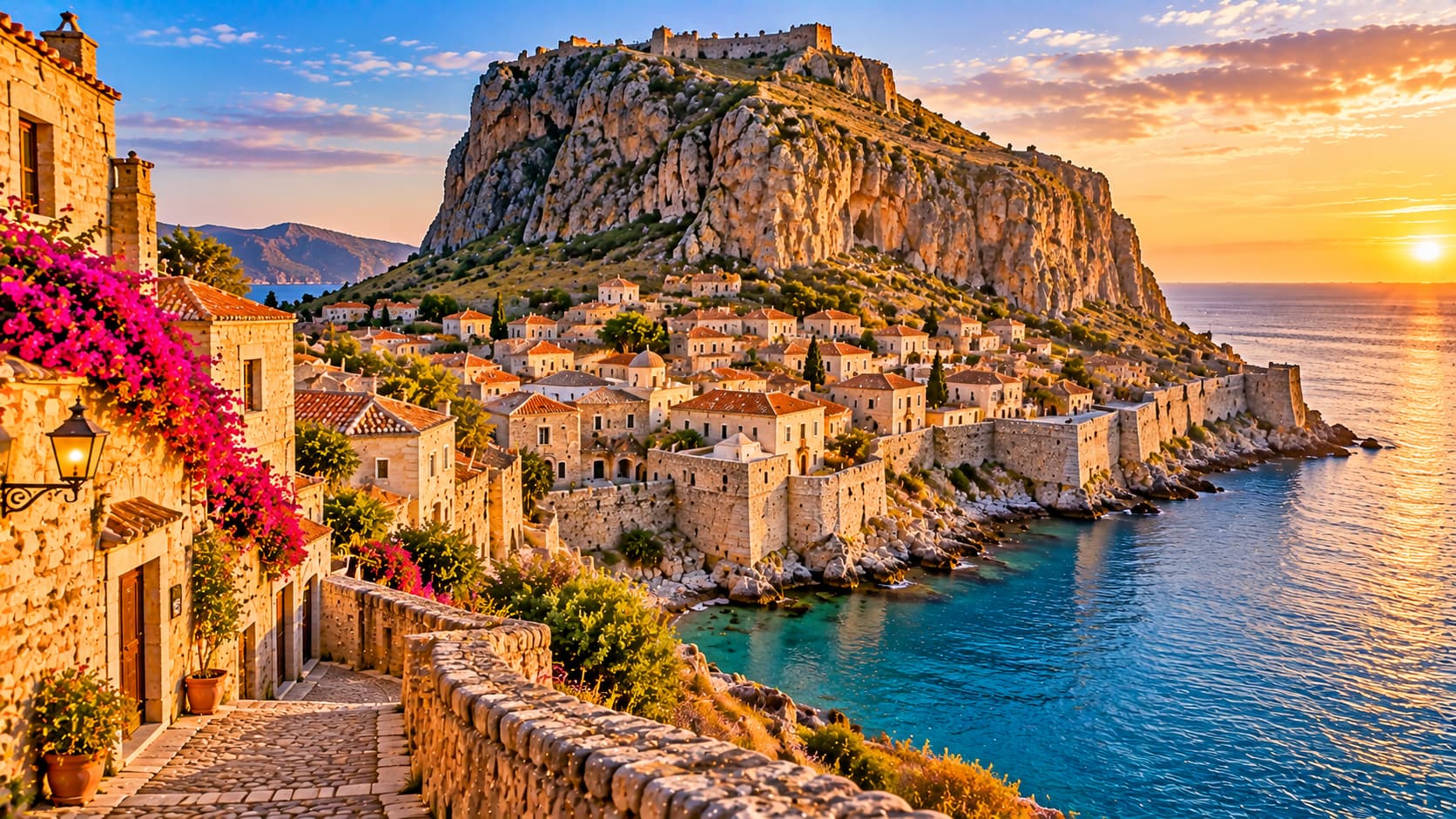
Built against a massive rocky island connected to the mainland by a narrow causeway, this historic fortress town is often described as the Gibraltar of the East.
Its name means “single entrance,” reflecting the town’s strategic position and fortified history.
Visitors enter through an ancient gateway and discover a car-free medieval world filled with stone houses, narrow cobblestone paths, Byzantine churches, and beautiful sea views.
The lower town contains charming boutique hotels, traditional Greek tavernas, artisan shops, and historic mansions.
One of the main landmarks is the Church of Elkomenos Christos, located near the central square.
Another fascinating attraction is the historic Church of Panagia Chrysafitissa.
For adventurous visitors, a steep path leads to the ruins of the upper town.
Here, the Church of Agia Sophia stands dramatically near the cliff edge, overlooking the beautiful Myrtoan Sea.
The surrounding scenery is especially breathtaking during sunrise and sunset.
Monemvasia offers a peaceful alternative to Greece’s busier island destinations, particularly during spring and autumn.
Its Byzantine heritage, romantic stone architecture, and extraordinary coastal location make it one of Europe’s most memorable medieval towns.
17. Albarracín, Spain – A Pink-Hued Medieval Mountain Town
Hidden among the mountains of Aragón, Albarracín is one of Spain’s most beautiful and atmospheric medieval towns.
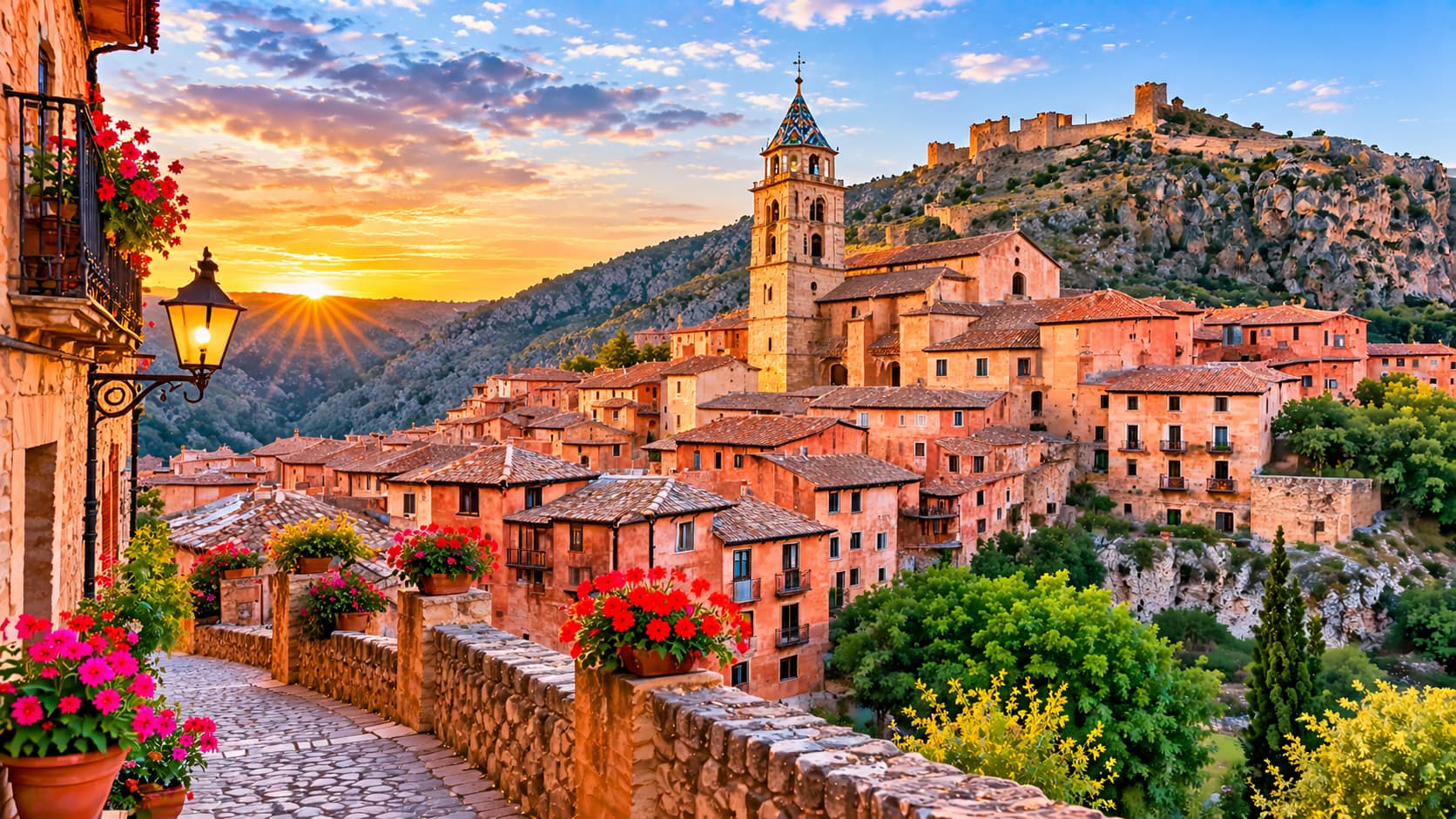
This remarkable hilltop settlement is famous for its distinctive pink and terracotta-colored buildings, steep cobblestone streets, and ancient defensive walls.
The town rises above the Guadalaviar River, surrounded by rugged mountain scenery.
Its historic architecture reflects centuries of Moorish and Christian influence.
Medieval fortifications climb the surrounding ridges, creating a dramatic skyline that becomes particularly beautiful in the warm light of sunset.
Walking through Albarracín’s narrow streets feels like traveling back in time.
Traditional timber-framed houses lean over winding passageways, while stone archways and hidden squares reveal the town’s historic character.
The cathedral and Plaza Mayor are among its most important landmarks.
Visitors can enjoy traditional Aragonese cuisine, including migas, roasted lamb, and regional specialties.
Beyond the town, the surrounding Sierra de Albarracín offers beautiful hiking opportunities.
The protected Pinares de Rodeno landscape is known for its unusual rock formations, pine forests, and prehistoric rock art.
For travelers looking to discover a quieter side of Spain, Albarracín offers a wonderful combination of medieval heritage and natural beauty.
18. Mdina, Malta – The Silent City
Perched on a fortified hilltop in the heart of Malta, Mdina is one of the Mediterranean’s most atmospheric historic towns.
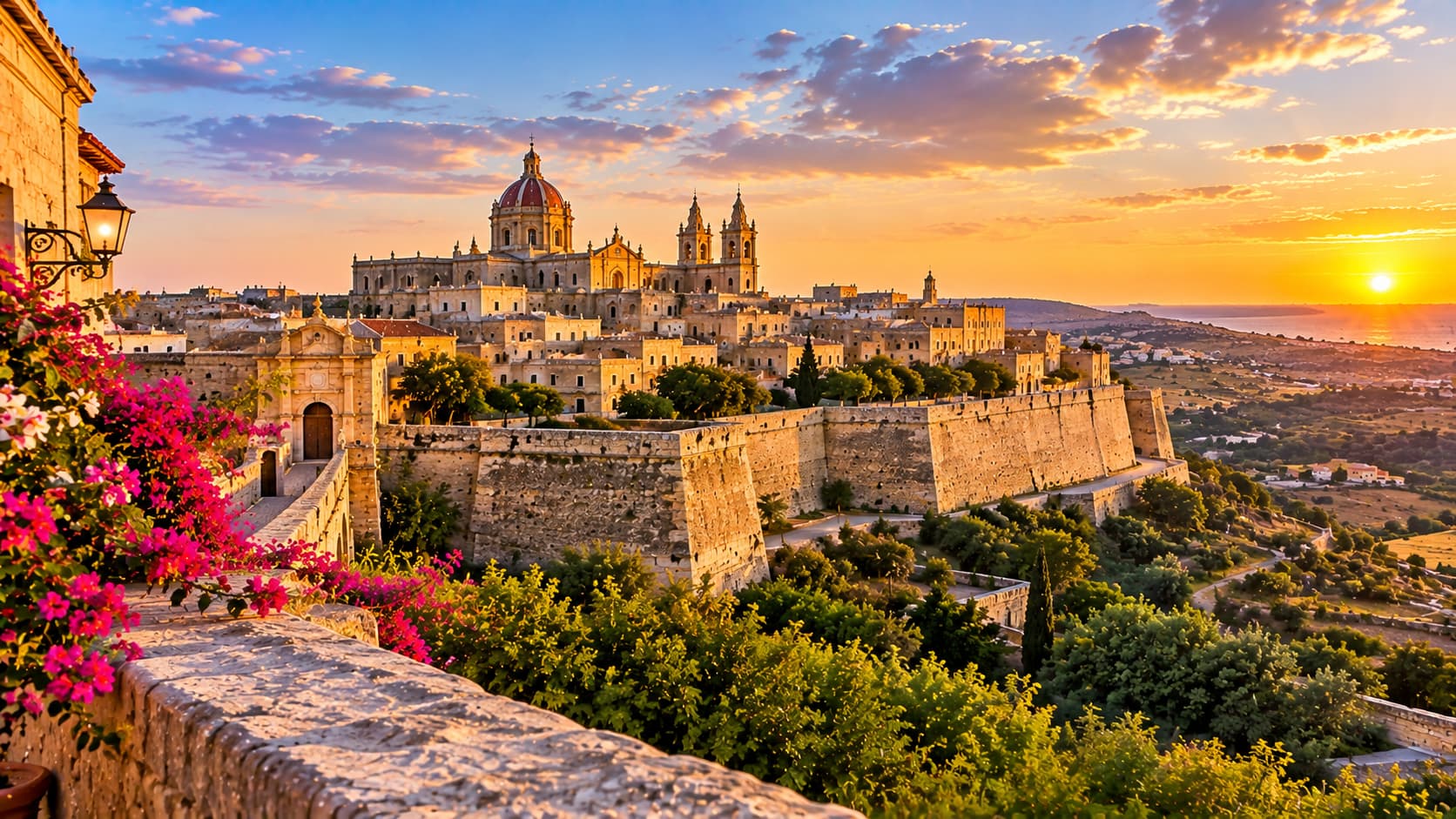
Known as the Silent City, Mdina served as Malta’s capital for centuries and preserves a fascinating combination of medieval and Baroque architecture.
Its narrow streets, massive defensive walls, and elegant limestone buildings create an environment that feels remarkably removed from modern life.
Visitors enter through the impressive Mdina Gate, built in the 18th century.
Beyond the gateway, peaceful lanes lead past historic palaces, beautiful churches, and charming courtyards.
One of the city’s most important landmarks is St. Paul’s Cathedral, celebrated for its elaborate Baroque interior, religious paintings, and decorative marble flooring.
Mdina’s quiet atmosphere is partly due to strict vehicle access restrictions within the historic center.
Without heavy traffic, visitors can enjoy the peaceful streets and admire the warm golden tones of traditional Maltese limestone architecture.
The city walls provide spectacular views across the surrounding countryside and toward the Mediterranean Sea.
History enthusiasts can explore museums and exhibitions that reveal Malta’s fascinating past.
Mdina also gained international attention as a filming location for the television series Game of Thrones.
However, its genuine historical atmosphere is far more impressive than any fictional setting.
As evening falls, softly illuminated streets and romantic courtyards make Mdina particularly enchanting.
19. San Gimignano, Italy – Tuscany’s Town of Medieval Towers
Rising above the rolling hills of Tuscany, San Gimignano is one of Italy’s most distinctive medieval towns.
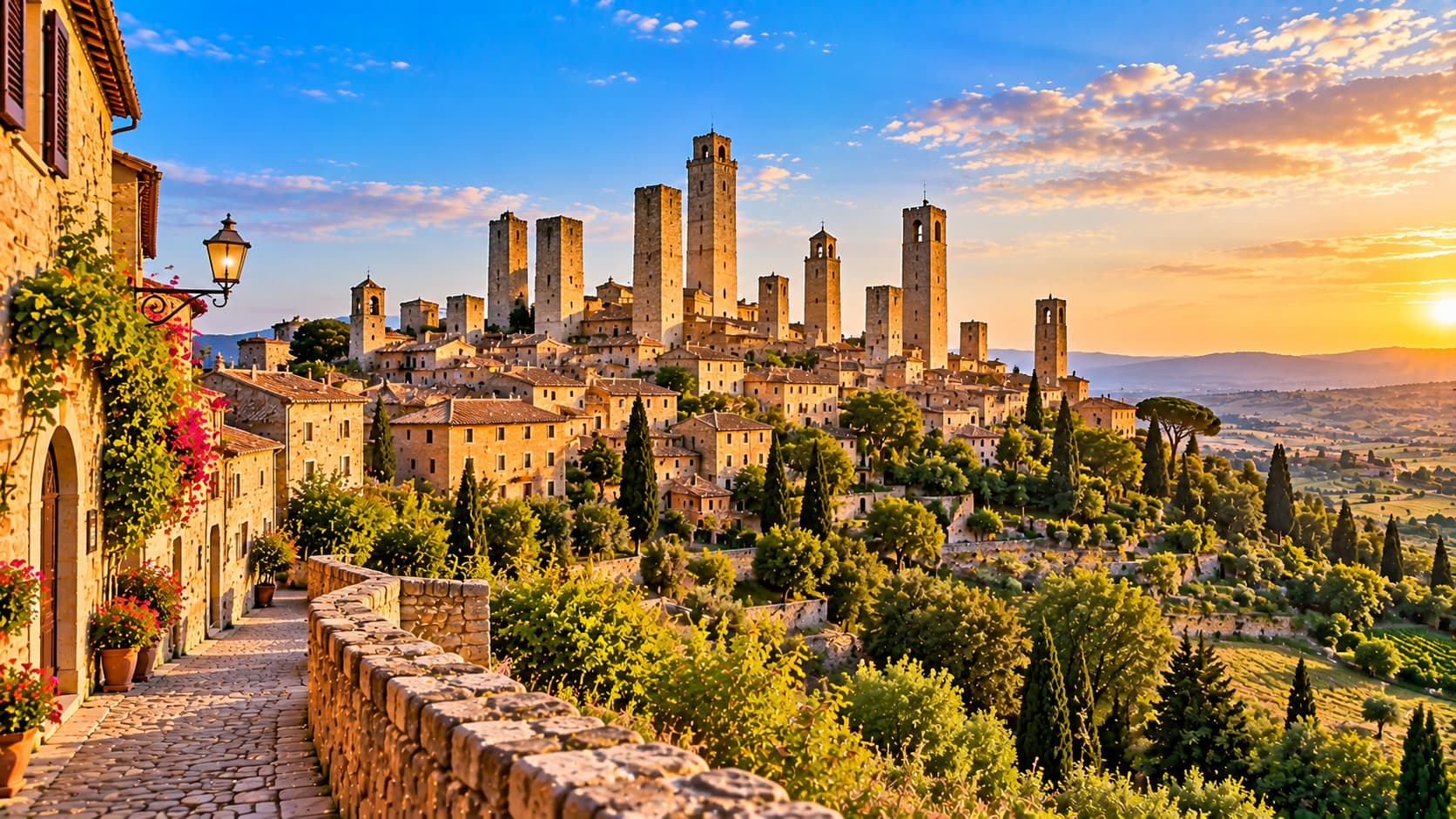
Famous for its remarkable skyline of ancient stone towers, San Gimignano is often called the Town of Fine Towers.
During the Middle Ages, wealthy families constructed towers as symbols of prestige and power.
Although dozens once dominated the skyline, 14 historic towers remain today.
The town’s beautifully preserved medieval center is recognized as a UNESCO World Heritage Site.
At its heart lies Piazza della Cisterna, a charming square surrounded by historic stone buildings and centered around a medieval well.
Nearby, the Torre Grossa rises above the town and offers panoramic views across Tuscany’s vineyards, olive groves, and countryside.
San Gimignano’s narrow streets connect picturesque squares, historic churches, and traditional artisan shops.
The Collegiate Church is particularly famous for its extraordinary medieval frescoes depicting biblical scenes.
Visitors can also discover local specialties such as saffron, traditional Tuscan products, and handcrafted ceramics.
The surrounding countryside is known for producing Vernaccia di San Gimignano, a celebrated local white wine.
For a delicious treat, stop at Gelateria Dondoli, famous for its award-winning gelato.
With its unforgettable towers, charming streets, and beautiful Tuscan scenery, San Gimignano is one of Italy’s most iconic medieval destinations.
20. Bruges, Belgium – The Venice of the North
Few European cities capture medieval romance as beautifully as Bruges.
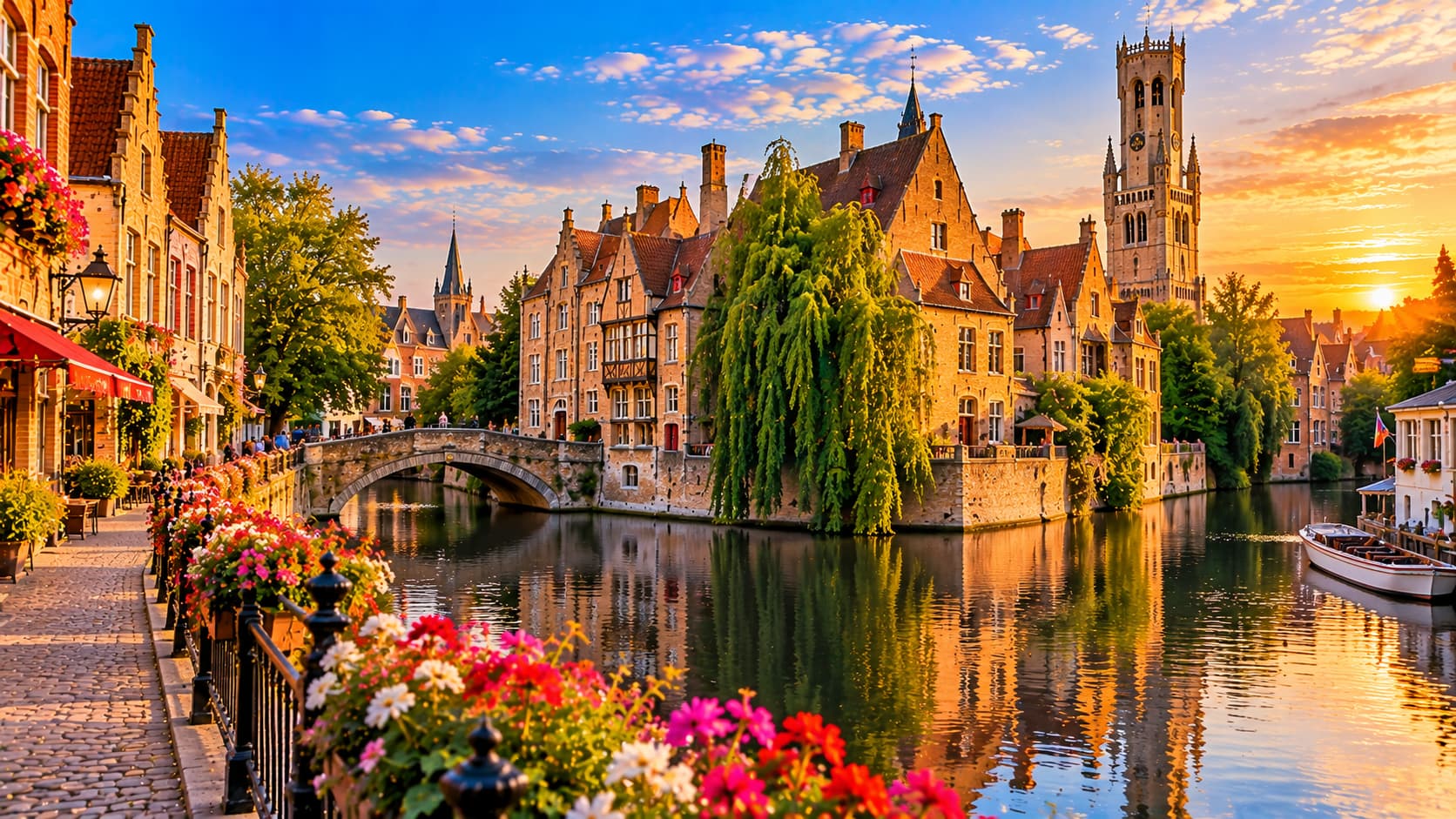
Often called the Venice of the North, Bruges is famous for its peaceful canals, cobblestone streets, historic churches, and beautifully preserved medieval architecture.
The city’s historic center is recognized as a UNESCO World Heritage Site.
Walking through Bruges feels like exploring an open-air museum, where Gothic buildings and centuries-old merchant houses reveal the city’s prosperous trading history.
At the heart of the city lies the magnificent Markt, or Market Square.
The impressive Belfry of Bruges rises above the square, offering panoramic views across red rooftops, church spires, and historic streets.
Bruges is best explored on foot or by boat.
A canal cruise allows visitors to admire beautiful bridges, medieval houses, and charming waterfront scenery from a different perspective.
The city is also internationally famous for Belgian chocolate, traditional lace-making, and historic brewing traditions.
Visitors can explore fascinating museums, art galleries, beautiful churches, and traditional shops.
During winter, Bruges becomes even more magical as Christmas markets and festive lights illuminate its historic squares.
In the evening, softly glowing buildings reflect across the canals, creating one of Europe’s most romantic settings.
For anyone searching for the most beautiful medieval cities in Europe, Bruges is an essential destination.
21. Tallinn Old Town, Estonia – A Medieval Baltic Masterpiece
Located on the shores of the Baltic Sea, Tallinn Old Town is one of Northern Europe’s best-preserved medieval urban centers.
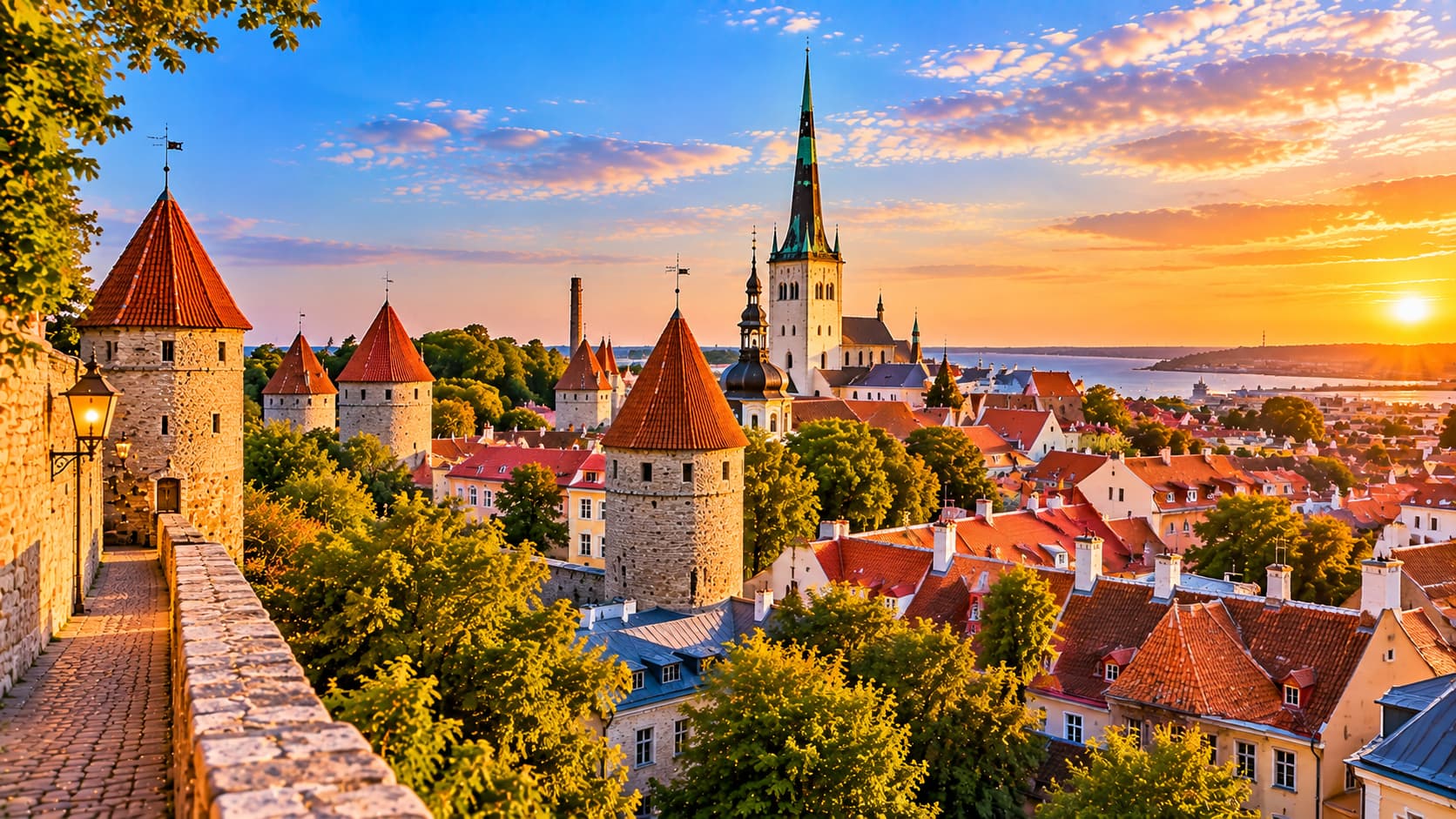
This UNESCO World Heritage Site reflects the city’s prosperous history as a Hanseatic trading port.
Its historic center features impressive defensive walls, medieval towers, Gothic churches, and beautifully preserved merchant houses.
The lower town is centered around Town Hall Square, a lively historic gathering place surrounded by colorful buildings.
The magnificent Gothic Town Hall is one of Tallinn’s most important architectural landmarks.
Its famous weather vane, known as Old Thomas, has become a beloved symbol of the city.
Nearby, St. Olaf’s Church rises above the rooftops and recalls Tallinn’s importance as a maritime trading center.
Visitors can explore sections of the medieval defensive walls and discover historic towers that once protected the city.
Above the lower town lies Toompea Hill, home to Toompea Castle and the striking Alexander Nevsky Cathedral.
The Kohtuotsa and Patkuli viewing platforms offer spectacular panoramas across red-tiled rooftops, medieval spires, and the Baltic coastline.
Tallinn also features atmospheric restaurants serving traditional Estonian dishes alongside creative modern cuisine.
With its remarkable preservation and vibrant cultural life, Tallinn offers one of Europe’s finest medieval city experiences.
22. Sighișoara, Romania – A Living Medieval Fairytale
Located in the heart of Transylvania, Sighișoara is one of Romania’s most enchanting historic towns.
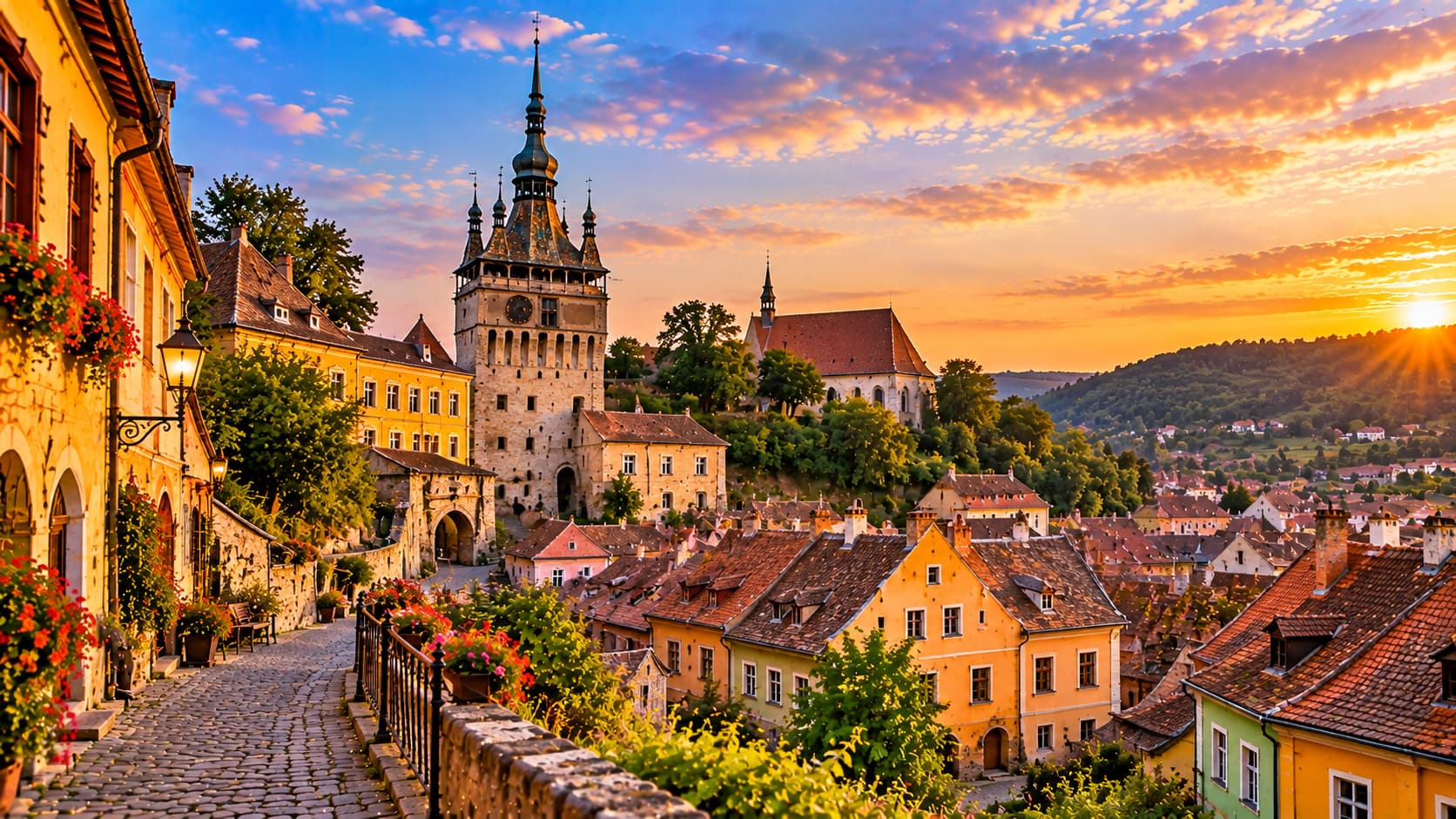
Famous for its colorful houses, ancient towers, and beautifully preserved citadel, Sighișoara offers an atmosphere that feels remarkably close to the Middle Ages.
Its historic center is recognized as a UNESCO World Heritage Site.
Walking through the citadel, visitors encounter narrow cobblestone streets, traditional buildings painted in soft pastel colors, hidden courtyards, and centuries-old defensive walls.
The town’s most famous landmark is the magnificent Clock Tower.
Rising above the historic center, this impressive structure provides beautiful views across the colorful rooftops and surrounding countryside.
Sighișoara is also associated with Vlad the Impaler, the historical figure often connected to the legend of Dracula.
This fascinating connection adds a sense of mystery to the town’s already captivating atmosphere.
Unlike many larger European destinations, Sighișoara retains a peaceful and intimate character.
Visitors can explore its historic streets, admire traditional architecture, and enjoy the relaxed rhythm of Transylvanian life.
As evening approaches, warm lights illuminate the medieval buildings, creating an especially romantic setting.
For travelers interested in history, architecture, and fairytale scenery, Sighișoara is one of the most beautiful medieval towns in Eastern Europe.
23. Český Krumlov, Czech Republic – A Fairytale Town on the Vltava River
Nestled within a graceful bend of the Vltava River, Český Krumlov is one of Central Europe’s most picturesque historic towns.
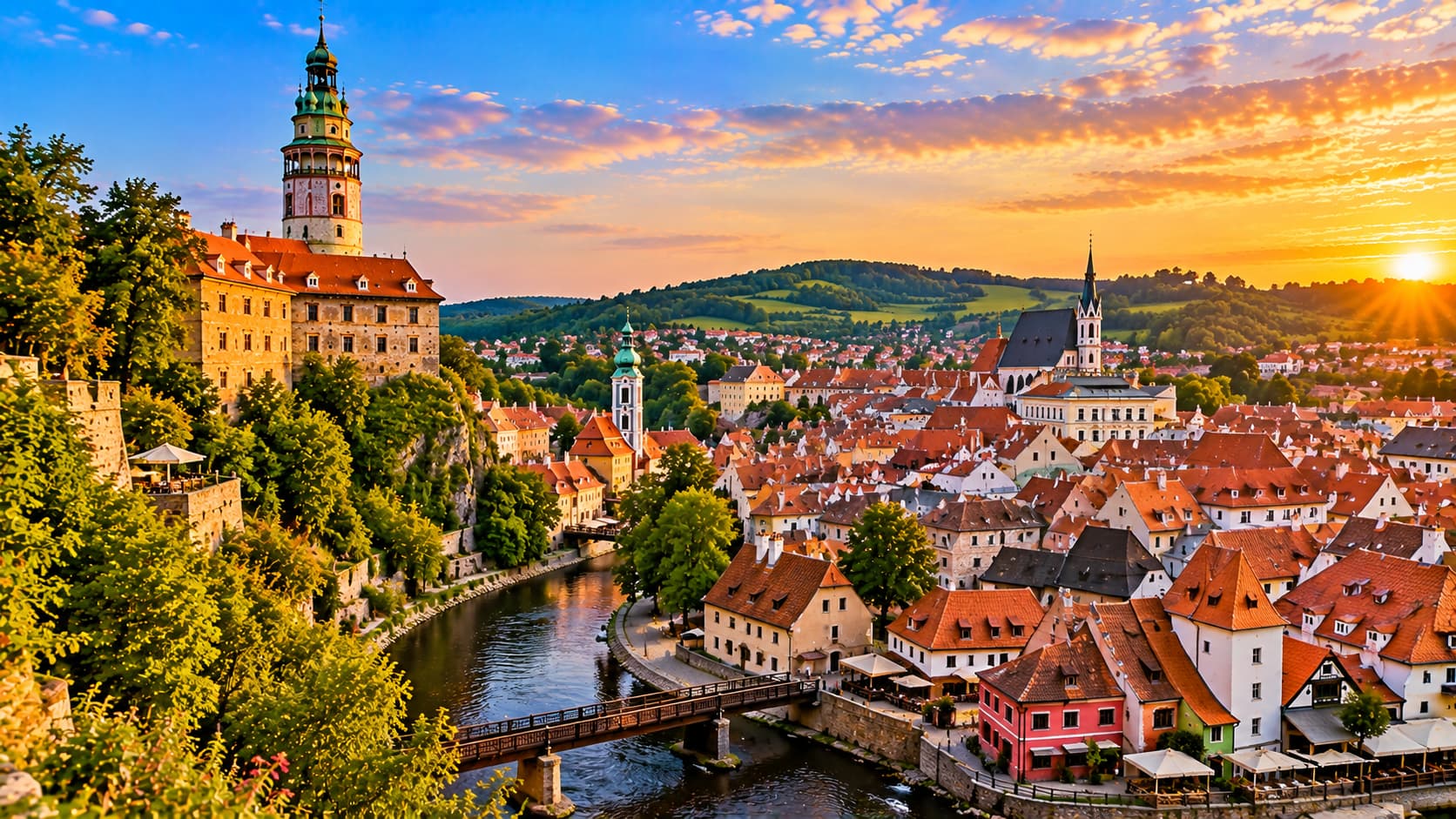
Located in the South Bohemian region of the Czech Republic, this UNESCO World Heritage Site is famous for its magnificent castle, winding medieval streets, and beautifully preserved architecture.
The town’s most impressive attraction is Český Krumlov Castle, one of the largest castle complexes in the country.
Rising above the historic center, the castle features elegant courtyards, colorful towers, beautiful gardens, and spectacular viewpoints.
From its elevated position, visitors can admire the red rooftops of the old town, the winding Vltava River, and the surrounding countryside.
Below the castle, narrow cobblestone streets lead between Renaissance and Baroque buildings.
Charming cafés, traditional shops, galleries, and hidden courtyards create a relaxed and welcoming atmosphere.
The Vltava River adds another layer of beauty as it curves around the historic center.
During warmer months, visitors can enjoy scenic riverside walks and boat trips that reveal the town from a different perspective.
Český Krumlov also offers a rich cultural scene, with museums, festivals, exhibitions, and traditional performances throughout the year.
When evening lights illuminate the castle and historic streets, the town becomes particularly magical.
With its exceptional architecture and romantic riverside setting, Český Krumlov is one of the best medieval towns to visit in Europe.
24. Rothenburg ob der Tauber, Germany – Germany’s Ultimate Fairytale Town
Located along Germany’s famous Romantic Road, Rothenburg ob der Tauber is one of Europe’s most iconic medieval towns.
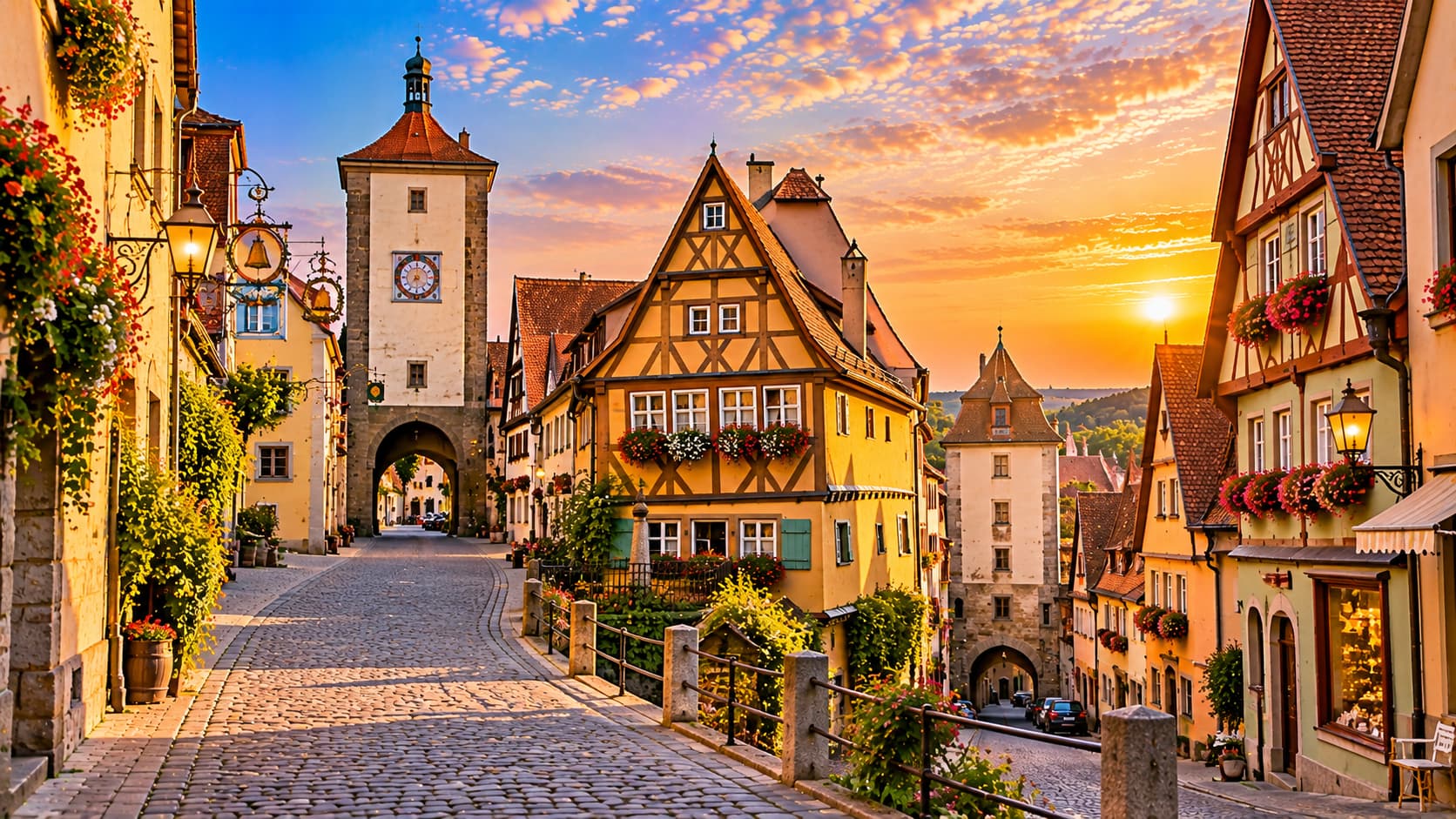
Its beautifully preserved defensive walls, colorful half-timbered houses, and winding cobblestone streets create the impression of stepping into a storybook.
The historic center is surrounded by ancient walls and towers that reflect the town’s medieval importance.
Walking through Rothenburg reveals charming squares, traditional German shops, historic churches, and beautifully restored buildings.
One of the town’s most famous landmarks is Plönlein, a picturesque corner featuring a small fountain, colorful houses, and two historic towers.
This unforgettable scene has become one of Germany’s most photographed medieval views.
Visitors can also climb the Town Hall Tower for spectacular panoramic views across the historic rooftops and surrounding Franconian countryside.
Rothenburg is particularly famous for its Christmas traditions.
Traditional Christmas shops, festive decorations, and seasonal markets create a magical atmosphere during the winter months.
The town also offers fascinating museums and historic attractions that reveal the daily lives, traditions, and challenges of medieval Europe.
Despite its popularity, Rothenburg retains a remarkable sense of historic charm.
For travelers dreaming of castles, cobblestone streets, and traditional German architecture, Rothenburg ob der Tauber is an essential stop.
25. Carcassonne, France – Europe’s Magnificent Medieval Fortress
Surrounded by towering stone walls and crowned with dramatic defensive turrets, Carcassonne is one of Europe’s most impressive fortified medieval towns.
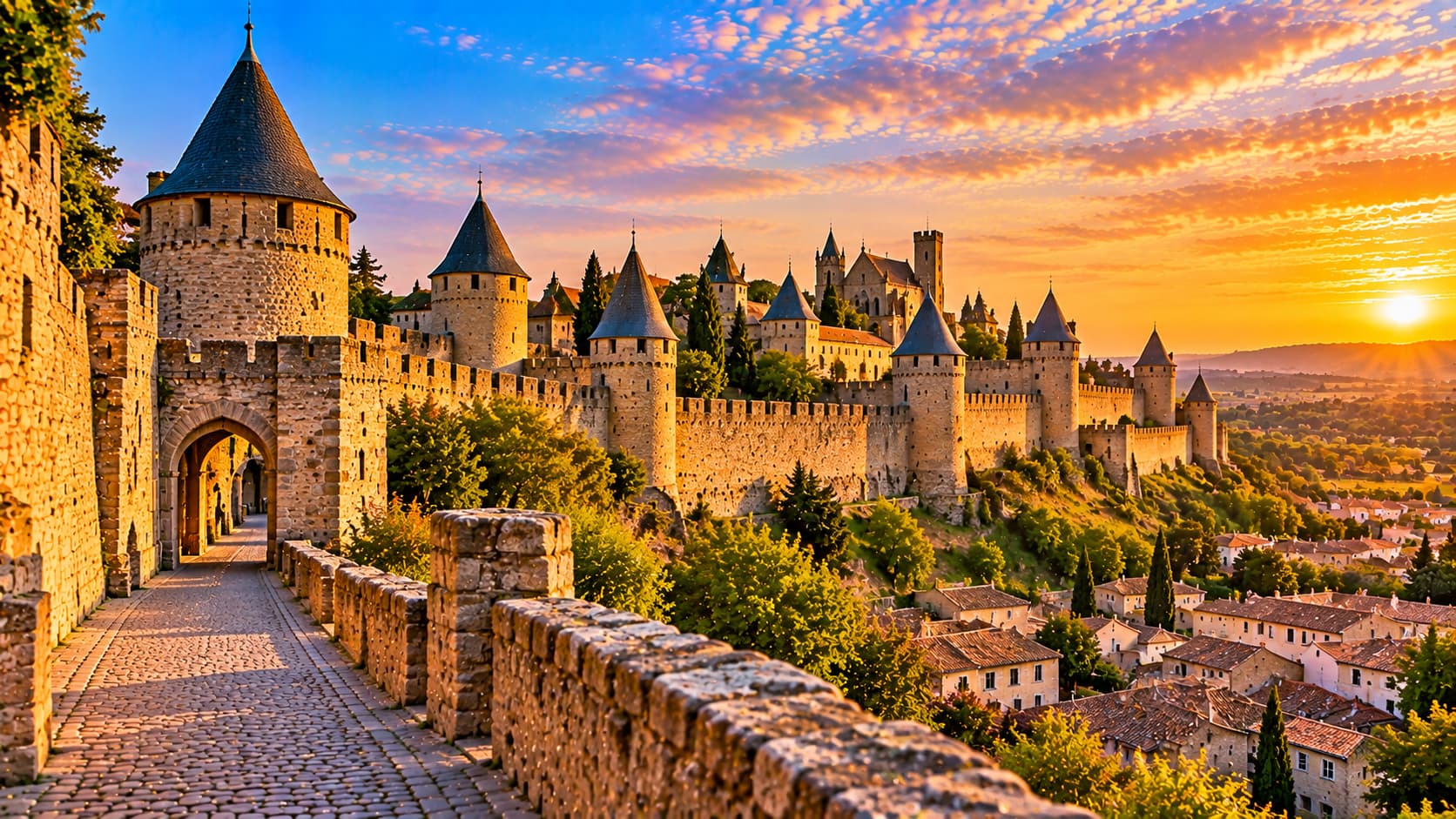
Located in southern France near the Aude River, Carcassonne offers visitors an extraordinary journey into the age of castles, knights, and medieval kingdoms.
Its most famous attraction is the Cité de Carcassonne, a magnificent fortified citadel recognized as a UNESCO World Heritage Site.
The citadel is protected by approximately three kilometers of defensive walls and more than 50 towers.
Passing through its monumental gates feels like entering another century.
Inside the fortifications, visitors discover narrow cobblestone streets, traditional stone buildings, artisan workshops, charming squares, and inviting restaurants.
One of the most important landmarks is Château Comtal, the historic castle located within the fortified city.
Visitors can explore its impressive defensive structures and learn about the region’s turbulent medieval history.
Nearby, the Basilica of Saints Nazarius and Celsus showcases a beautiful combination of Romanesque and Gothic architecture.
Its magnificent stained-glass windows and historic stone interiors make it one of the citadel’s architectural highlights.
Beyond the medieval walls, Carcassonne’s lower town offers lively markets, elegant streets, and a different perspective on everyday French life.
As evening falls, the ancient fortifications glow beneath warm lighting, creating an unforgettable atmosphere.
Carcassonne is more than a historic fortress. It is a remarkable place where medieval architecture, cultural heritage, and centuries of European history remain vividly present.
For anyone fascinated by medieval Europe, Carcassonne is one of the continent’s most extraordinary destinations.
Best Time to Visit Medieval Towns in Europe
The best time to explore Europe’s medieval towns depends on your preferred weather, activities, and travel experience.
Spring (April–May)
Mild temperatures, blooming flowers, and generally smaller crowds make spring ideal for sightseeing and photography.
Summer (June–August)
Longer daylight hours, outdoor festivals, and warm weather make summer excellent for exploring, although popular destinations can become crowded.
Autumn (September–October)
Golden landscapes, pleasant temperatures, and fewer tourists create wonderful conditions for visiting medieval villages and wine regions.
Winter (November–February)
Christmas markets, festive lights, and occasional snowfall transform many medieval towns into magical winter destinations.
For most travelers, May, June, September, and early October offer a particularly good balance of comfortable weather and manageable crowds.
Tips for Exploring Europe’s Medieval Towns
Exploring historic European towns can be one of the most rewarding travel experiences, especially when you take time to appreciate their architecture and local traditions.
- Wear comfortable walking shoes. Many medieval towns have uneven cobblestone streets, steep stairways, and narrow pedestrian paths.
- Visit early in the morning. Popular destinations are often quieter before organized tours and day-trippers arrive.
- Stay overnight when possible. Historic towns can feel completely different after the daytime crowds disappear.
- Explore beyond the main attractions. Hidden courtyards, small churches, and peaceful side streets often reveal the most authentic experiences.
- Try regional cuisine. Traditional dishes, local cheeses, wines, and handmade specialties are an important part of European cultural heritage.
- Respect historic sites. Ancient buildings and monuments require careful preservation for future generations.
- Check seasonal opening hours. Castles, museums, and historical attractions may operate on different schedules throughout the year.
Frequently Asked Questions About Medieval Towns in Europe
What are the most beautiful medieval towns in Europe?
Some of the most beautiful medieval towns in Europe include Bruges in Belgium, Rothenburg ob der Tauber in Germany, Český Krumlov in the Czech Republic, Carcassonne in France, San Gimignano in Italy, and Tallinn Old Town in Estonia. Each offers exceptional historic architecture and a distinctive atmosphere.
Which European country has the best-preserved medieval towns?
Several European countries are known for their remarkably preserved medieval towns, particularly France, Germany, Italy, Spain, Belgium, and the Czech Republic. The best choice depends on whether you prefer fortified castles, Gothic architecture, historic villages, or medieval waterfront towns.
What is the most famous medieval town in Germany?
Rothenburg ob der Tauber is among Germany’s most famous medieval towns. Located along the Romantic Road, it is celebrated for its preserved defensive walls, half-timbered houses, cobblestone streets, and picturesque Plönlein landmark.
Are medieval towns in Europe worth visiting in winter?
Yes. Many European medieval towns become especially charming during winter. Destinations such as Rothenburg ob der Tauber, Colmar, Bruges, and Tallinn are known for their festive atmosphere, Christmas markets, and historic architecture illuminated by seasonal lights.
Which medieval towns in Europe are UNESCO World Heritage Sites?
Several destinations in this guide have UNESCO World Heritage recognition, including the historic centers of Bruges, Tallinn, Český Krumlov, and San Gimignano, as well as the fortified city of Carcassonne, the historic city of Trogir, and the Sassi of Matera.
What is the best medieval town in Europe for a romantic getaway?
Bruges, Colmar, Èze, Óbidos, and Monemvasia are excellent choices for romantic trips. Their charming streets, historic buildings, scenic viewpoints, and intimate restaurants create memorable settings for couples.
Final Thoughts: Discover the Timeless Beauty of Medieval Europe
Europe’s medieval towns offer much more than beautiful architecture and historic landmarks. They preserve centuries of culture, craftsmanship, traditions, and stories that continue to shape the continent today.
From the breathtaking Alpine scenery of Gruyères and Hallstatt to the fortified walls of Carcassonne and the romantic canals of Bruges, every destination offers a different perspective on Europe’s fascinating past.
Some towns impress with dramatic castles and defensive towers, while others captivate visitors through colorful houses, peaceful squares, and spectacular natural surroundings.
What makes these places truly special is the opportunity to experience history beyond museum walls.
You can walk along streets traveled by medieval merchants, admire churches built hundreds of years ago, and discover local traditions that have survived through generations.
Whether you’re planning your first European adventure or searching for hidden historic destinations, these 25 most beautiful medieval towns in Europe deserve a place on your travel bucket list.
Take the opportunity to explore Europe’s extraordinary medieval heritage and discover the timeless charm of places where history still feels alive.
Which medieval town in Europe would you love to visit first?
Have any thoughts?
Share your reaction or leave a quick response — we’d love to hear what you think!
-
 0
0
-
 0
0
-
 0
0
-
 0
0
-
 0
0
-
 0
0