
Europe is a continent where centuries of history meet modern culture, spectacular architecture, and unforgettable travel experiences. From the romantic canals of Venice and the ancient ruins of Rome to the elegant boulevards of Paris and the royal landmarks of London, Europe’s most famous cities offer something extraordinary for every traveler.
Whether you’re fascinated by medieval castles, world-class museums, vibrant nightlife, traditional cuisine, or breathtaking cityscapes, exploring the most visited cities in Europe is an adventure through some of the world’s richest cultural destinations.
Every European city tells a different story. Some are celebrated for their imperial heritage, others for their artistic achievements, charming neighborhoods, or remarkable historical monuments. Together, they showcase the diversity that makes Europe one of the world’s most appealing travel regions.
In this comprehensive Europe travel guide, we’ll explore 15 of the continent’s most popular urban destinations, highlighting their famous attractions, cultural experiences, and unique atmosphere.
15. Munich, Germany – Bavarian Traditions and Royal Heritage
Munich, the capital of Bavaria, is one of Germany’s most charming cities, famous for its magnificent royal palaces, historic squares, traditional beer gardens, and proximity to the Bavarian Alps.
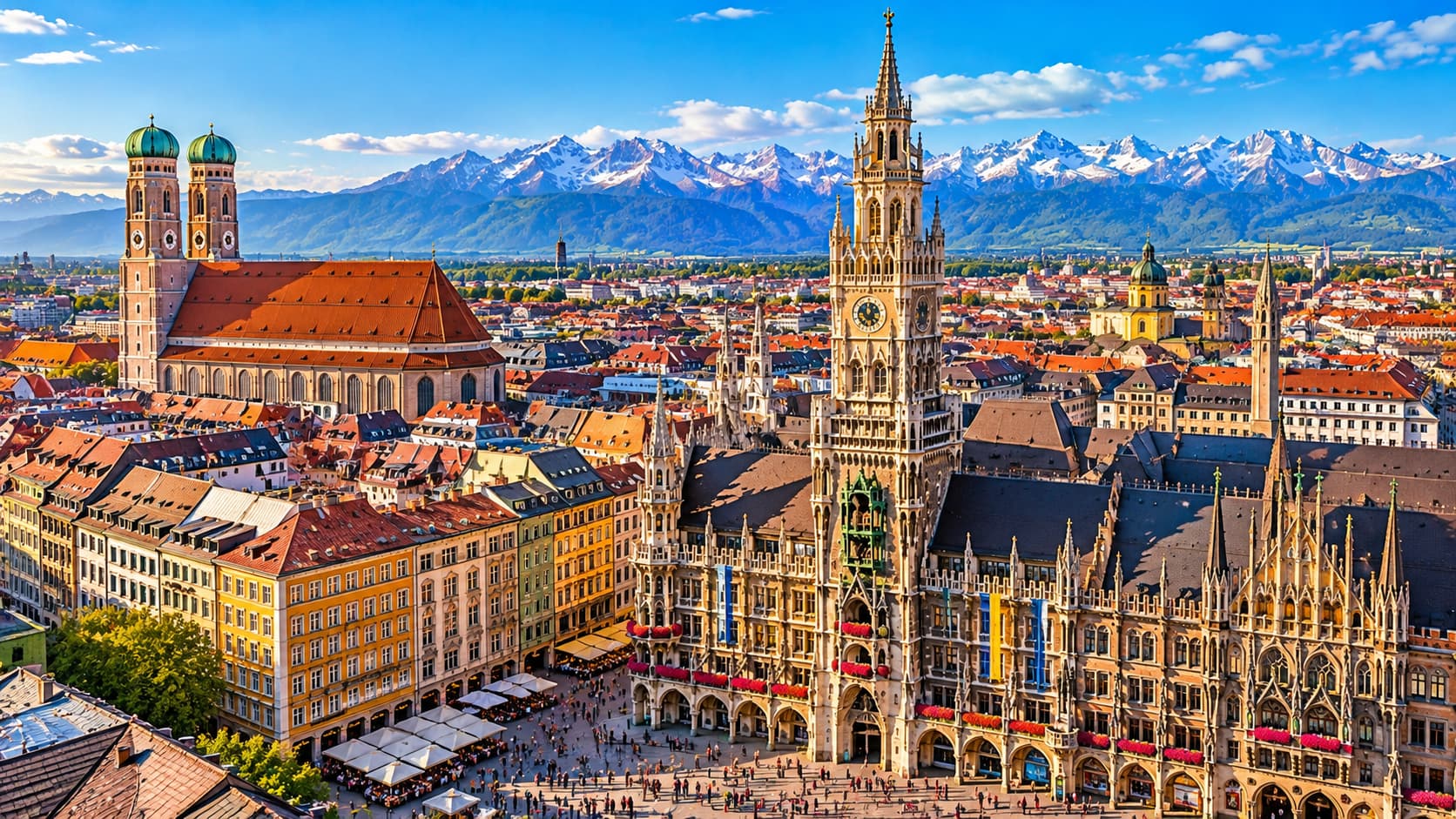
The city’s historic heart is Marienplatz, a lively square dominated by the spectacular New Town Hall. Its elaborate Gothic Revival architecture and famous Glockenspiel make it one of Munich’s most recognizable attractions.
Nearby, the twin towers of Frauenkirche have shaped the city’s skyline for centuries. The bustling Viktualienmarkt offers another authentic Bavarian experience, with stalls selling local cheeses, fresh produce, flowers, and traditional delicacies.
Munich’s royal history comes alive at the Residenz, the former residence of Bavaria’s rulers. Visitors can explore lavish ceremonial rooms, impressive collections, and beautiful architectural details. Another remarkable attraction is Nymphenburg Palace, surrounded by elegant gardens, canals, and extensive parkland.
No visit to Munich would be complete without experiencing its famous beer culture. Traditional beer halls and outdoor beer gardens serve Bavarian specialties, while the annual Oktoberfest attracts travelers from around the world.
For a peaceful escape, the enormous English Garden offers riverside meadows, scenic walking trails, and the fascinating spectacle of surfers riding the Eisbach wave.
Munich is also an excellent gateway to the Bavarian Alps, picturesque lakes, traditional villages, and fairytale castles.
Best things to do in Munich: Explore Marienplatz, visit Nymphenburg Palace, stroll through the English Garden, experience Bavarian beer culture, and discover the nearby Alpine countryside.
14. Venice, Italy – The Floating City of Romance
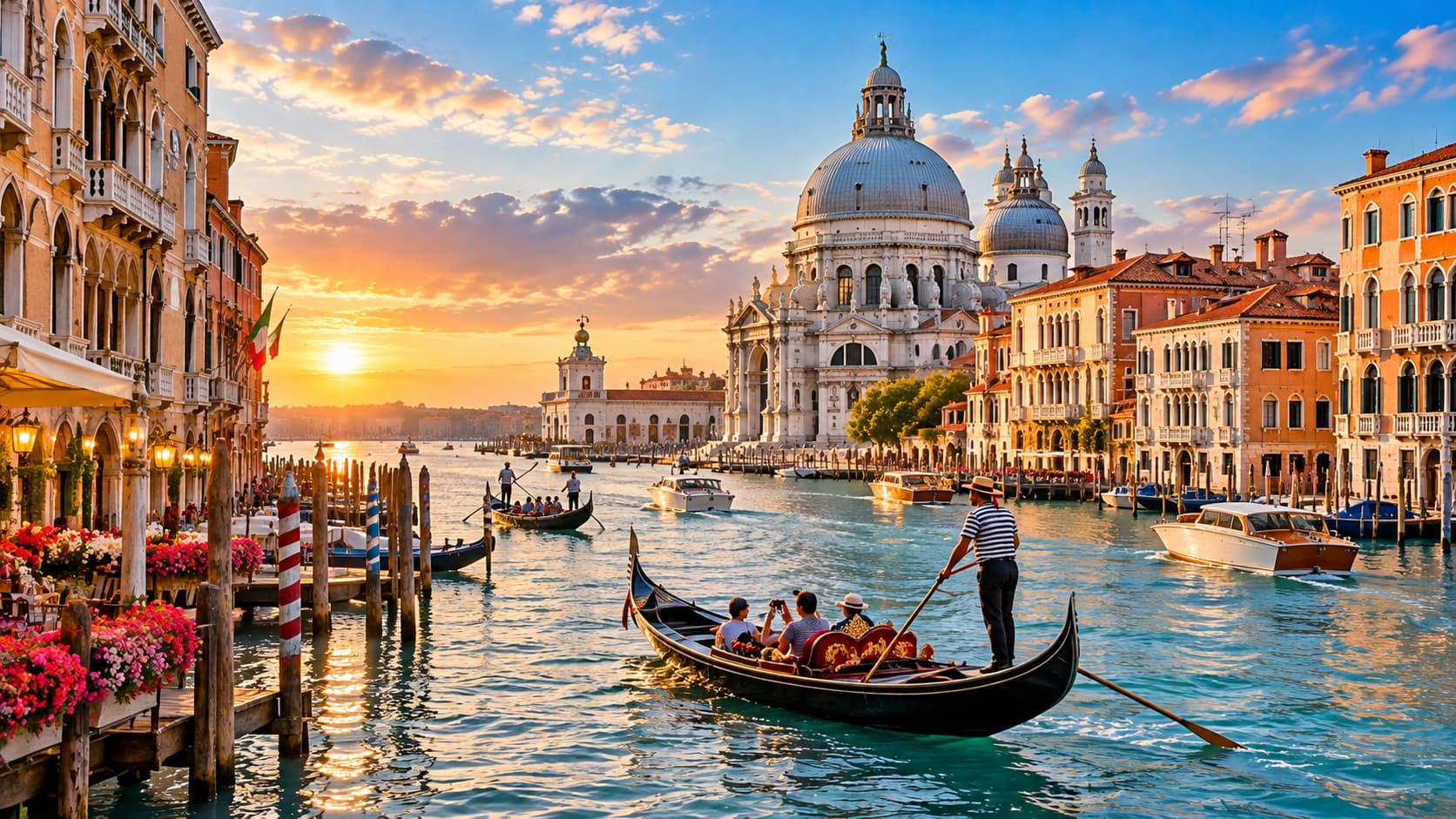
Venice is one of the most extraordinary cities in Europe. Built across more than 100 islands in a lagoon beside the Adriatic Sea, this enchanting Italian destination replaces ordinary streets with canals and cars with boats.
The heart of Venice is St. Mark’s Square, surrounded by magnificent architecture and centuries of maritime history. St. Mark’s Basilica is celebrated for its golden mosaics and Byzantine details, while the nearby Doge’s Palace reflects the power and wealth of the former Venetian Republic.
The Grand Canal winds through the city, passing elegant palaces and historic bridges. A boat journey along this famous waterway offers some of Venice’s most memorable views.
The Rialto Bridge is another iconic landmark, providing spectacular perspectives over the busy canal.
However, Venice’s magic extends far beyond its famous attractions. Wandering through quiet neighborhoods reveals hidden courtyards, picturesque bridges, charming churches, and traditional artisan workshops.
Across the lagoon, Murano is internationally renowned for glassmaking, while Burano delights visitors with brightly colored houses and its long tradition of lacework.
Venetian cuisine is another highlight. Fresh seafood, creamy risotto, and traditional cicchetti provide delicious opportunities to experience the city’s culinary heritage.
Venice becomes particularly enchanting in the evening, when quieter canals reflect the warm glow of streetlights and ancient buildings.
Best things to do in Venice: Visit St. Mark’s Basilica, explore the Doge’s Palace, cross Rialto Bridge, cruise the Grand Canal, and discover Murano and Burano.
13. Berlin, Germany – A City of History, Art, and Reinvention
Berlin is a fascinating European capital where dramatic history, contemporary architecture, street art, and creative culture exist side by side.
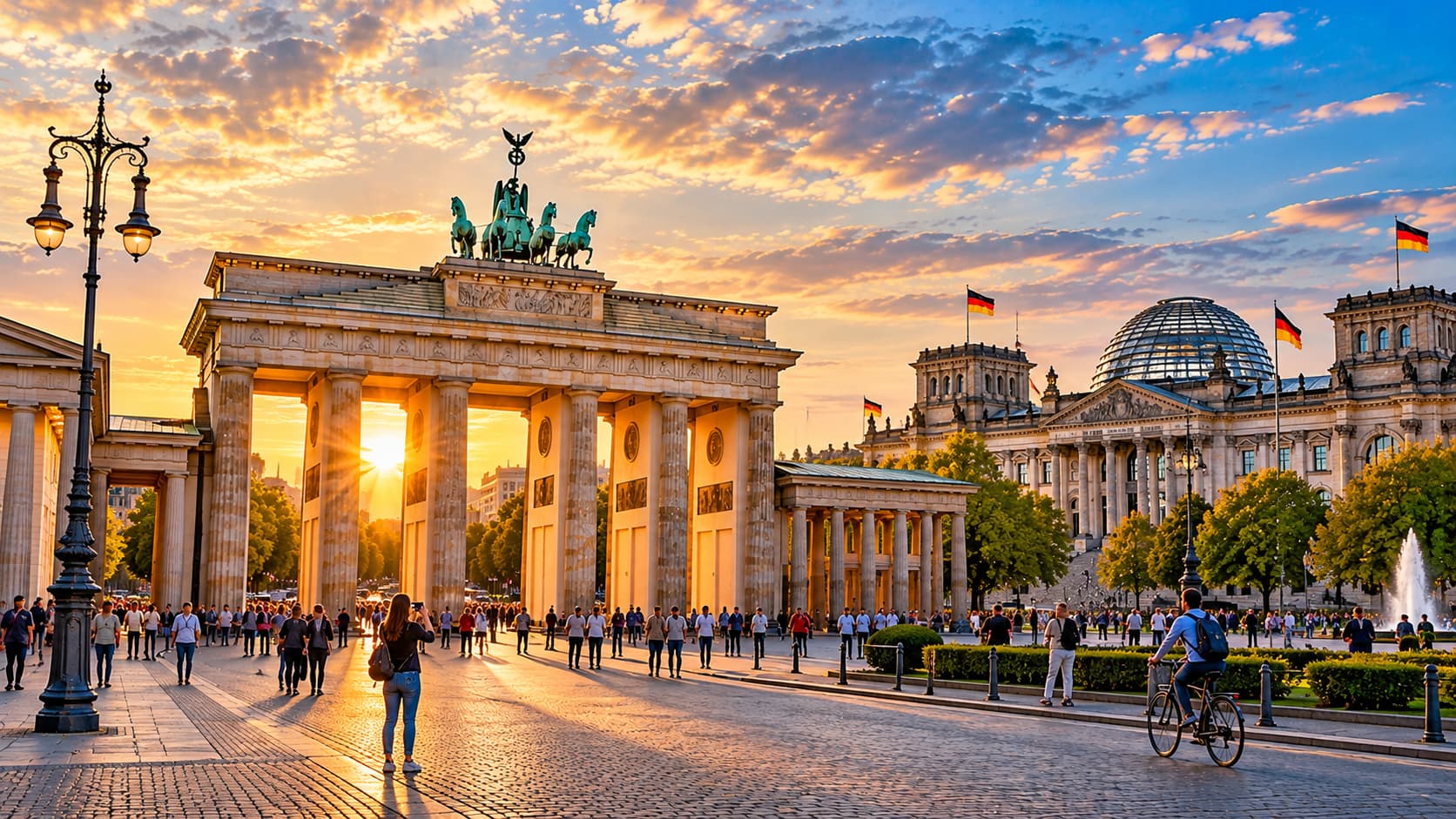
Few cities reflect the political transformations of modern Europe as clearly as Germany’s capital.
The Brandenburg Gate stands as Berlin’s most famous landmark and an enduring symbol of German reunification. Nearby, the Reichstag combines historic architecture with a modern glass dome that offers panoramic views over the government district.
Berlin’s Cold War history remains visible throughout the city. The East Side Gallery preserves a section of the Berlin Wall covered with colorful murals created by international artists.
Checkpoint Charlie recalls the division between East and West Berlin, while the Memorial to the Murdered Jews of Europe offers a powerful place for remembrance and reflection.
For art and history enthusiasts, Museum Island is an essential destination, bringing together important cultural institutions beside the River Spree.
Charlottenburg Palace reveals another chapter of Berlin’s history, showcasing the elegance of Prussian royal life.
Beyond its historic monuments, Berlin is celebrated for its distinctive neighborhoods. Kreuzberg is known for multicultural cuisine and street art, while Prenzlauer Berg offers leafy streets, independent shops, and welcoming cafés.
The city also has a vibrant nightlife scene, with music venues and creative spaces occupying former industrial buildings.
Berlin’s greatest attraction may be its ability to preserve the past while continuously reinventing itself.
Best things to do in Berlin: Visit Brandenburg Gate, explore the East Side Gallery, tour Museum Island, discover Charlottenburg Palace, and experience the city’s creative neighborhoods.
12. Dublin, Ireland – Literary Heritage and Irish Hospitality
Dublin, Ireland’s lively capital, combines historic architecture, literary traditions, welcoming pubs, and a vibrant cultural atmosphere.
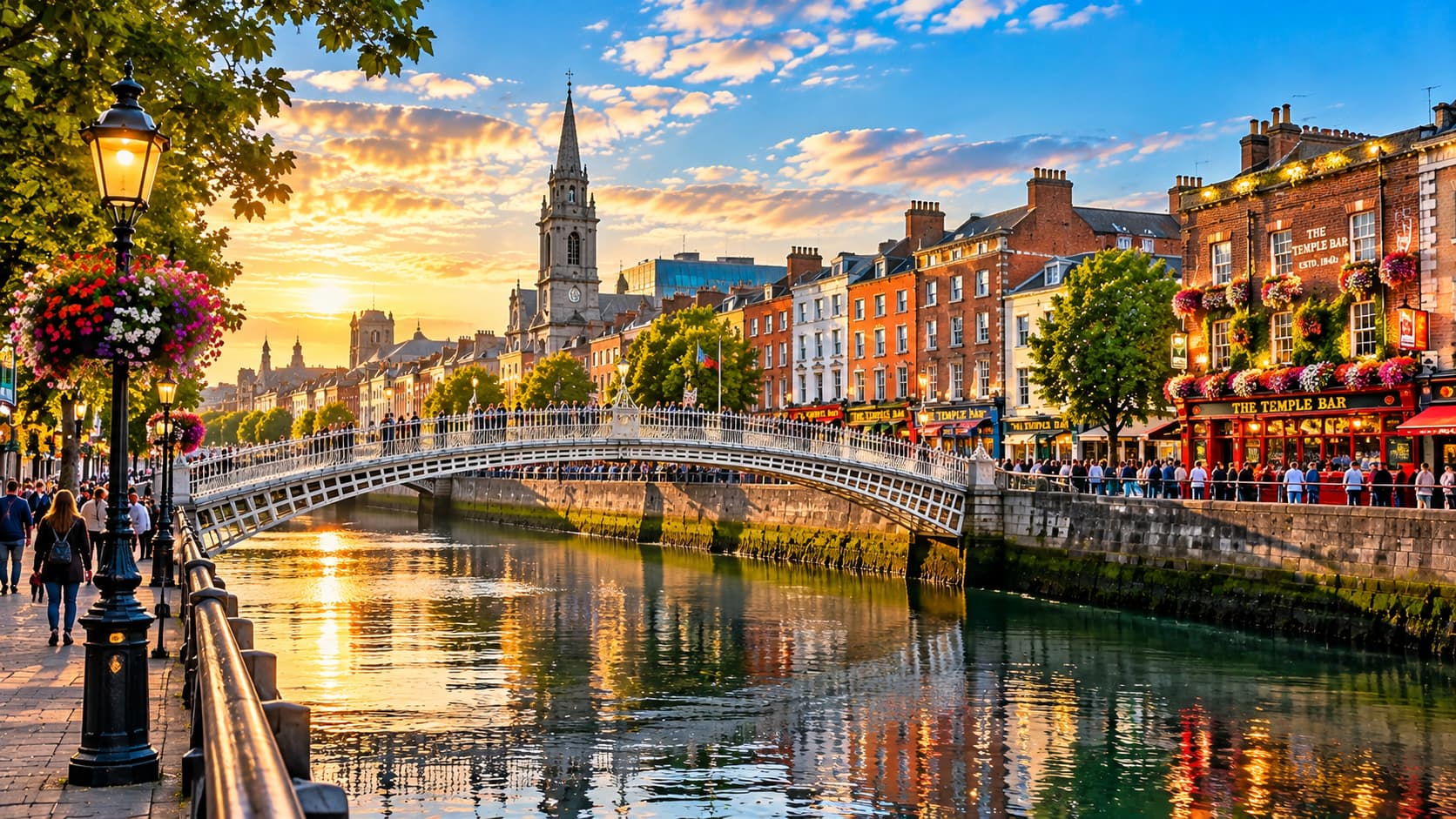
Situated along the River Liffey, Dublin has been shaped by Viking settlement, political struggles, celebrated writers, and generations of Irish storytelling.
One of the city’s most important attractions is Trinity College, founded in 1592. Its historic library is associated with the Book of Kells, an extraordinary illuminated medieval manuscript.
Nearby, Dublin Castle and St. Patrick’s Cathedral reveal different chapters of the city’s long history.
The General Post Office on O’Connell Street is another significant landmark, closely connected to Ireland’s struggle for independence.
Dublin’s famous Temple Bar district is known for its colorful streets, traditional pubs, restaurants, and live music performances.
For a quieter experience, Merrion Square and Fitzwilliam Square showcase elegant Georgian townhouses surrounding attractive green spaces.
Visitors interested in Irish brewing traditions can explore the Guinness Storehouse, which introduces the history of the country’s famous stout and offers panoramic city views.
Dublin also celebrates its remarkable literary legacy. James Joyce, Oscar Wilde, and Samuel Beckett are among the influential writers associated with the city.
Yet Dublin’s most memorable quality is often its atmosphere. Friendly conversations, traditional music sessions, and lively storytelling make the Irish capital feel welcoming and full of character.
Best things to do in Dublin: Explore Trinity College, visit Dublin Castle, discover Temple Bar, tour the Guinness Storehouse, and stroll through the Georgian neighborhoods.
11. Athens, Greece – The Birthplace of Western Democracy
Athens is one of the world’s oldest continuously inhabited cities and an essential destination for travelers interested in ancient history and classical civilization.
The Greek capital combines archaeological treasures with lively markets, rooftop cafés, traditional tavernas, and contemporary neighborhoods.
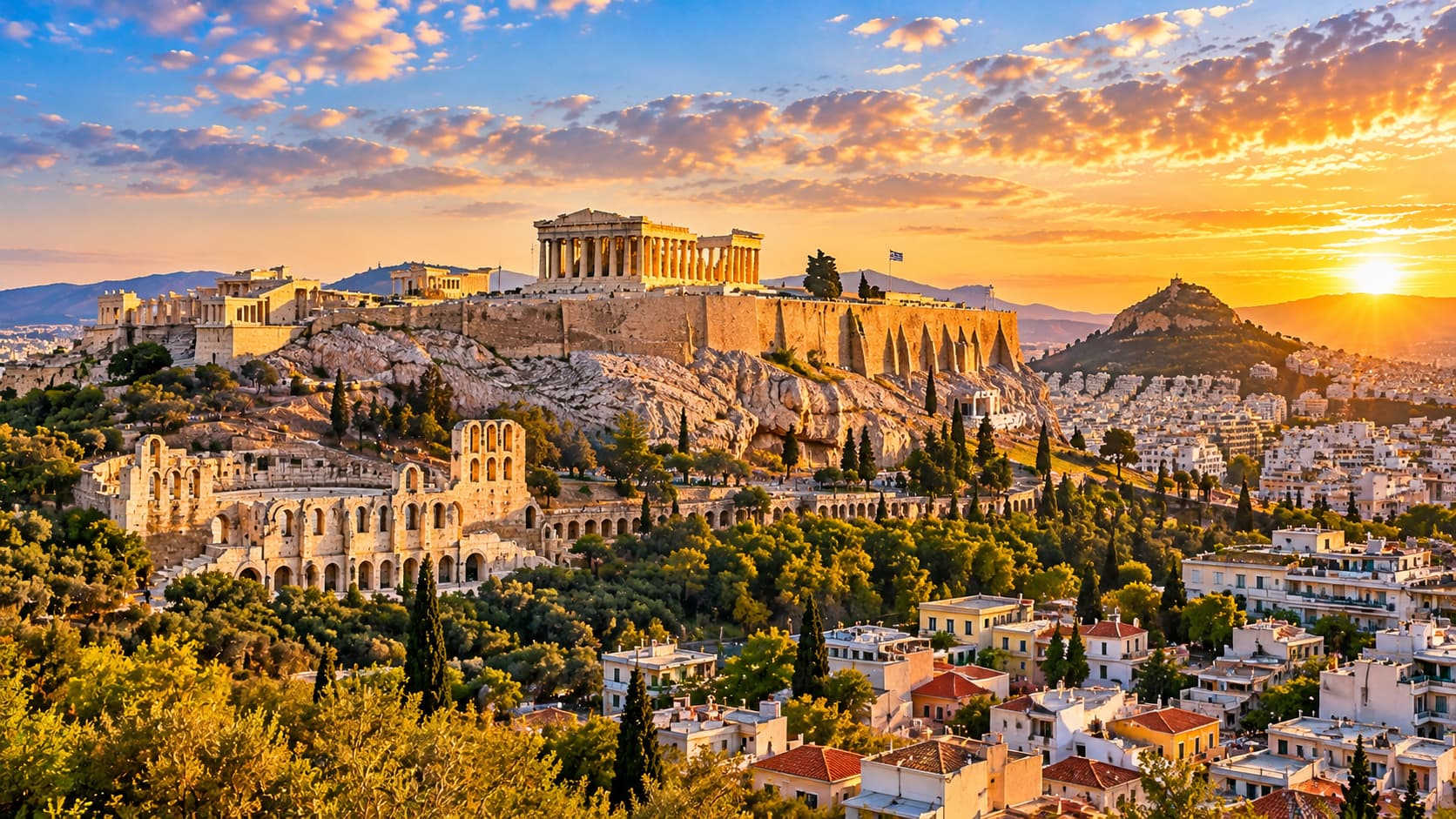
Dominating the skyline is the magnificent Acropolis, crowned by the Parthenon. Built during the fifth century BC and dedicated to Athena, the Parthenon remains one of the most recognizable monuments of ancient Greece.
Nearby, the Acropolis Museum houses remarkable archaeological discoveries and sculptures that illuminate the city’s extraordinary past.
The Ancient Agora once served as the center of political, commercial, and social life in classical Athens.
Other important landmarks include the Temple of Olympian Zeus and the Panathenaic Stadium, both offering fascinating insights into Greek history.
Modern Athens is equally captivating.
The picturesque Plaka neighborhood features narrow streets, neoclassical houses, traditional restaurants, and small shops beneath the Acropolis.
Monastiraki attracts visitors with bustling markets and lively public squares, while Psyrri is known for its restaurants, street art, and nightlife.
Greek cuisine adds another dimension to the experience. Souvlaki, grilled meats, seafood, olives, and traditional pastries are enjoyed in tavernas throughout the city.
For unforgettable views, climb Lycabettus Hill around sunset and watch the Acropolis glow above the sprawling capital.
Best things to do in Athens: Explore the Acropolis, visit the Acropolis Museum, wander through Plaka, discover the Ancient Agora, and enjoy panoramic views from Lycabettus Hill.
10. Lisbon, Portugal – Colorful Streets and Atlantic Charm
Lisbon is one of Europe’s most picturesque capitals, famous for its colorful tiled buildings, vintage yellow trams, steep streets, and breathtaking views over the Tagus River.
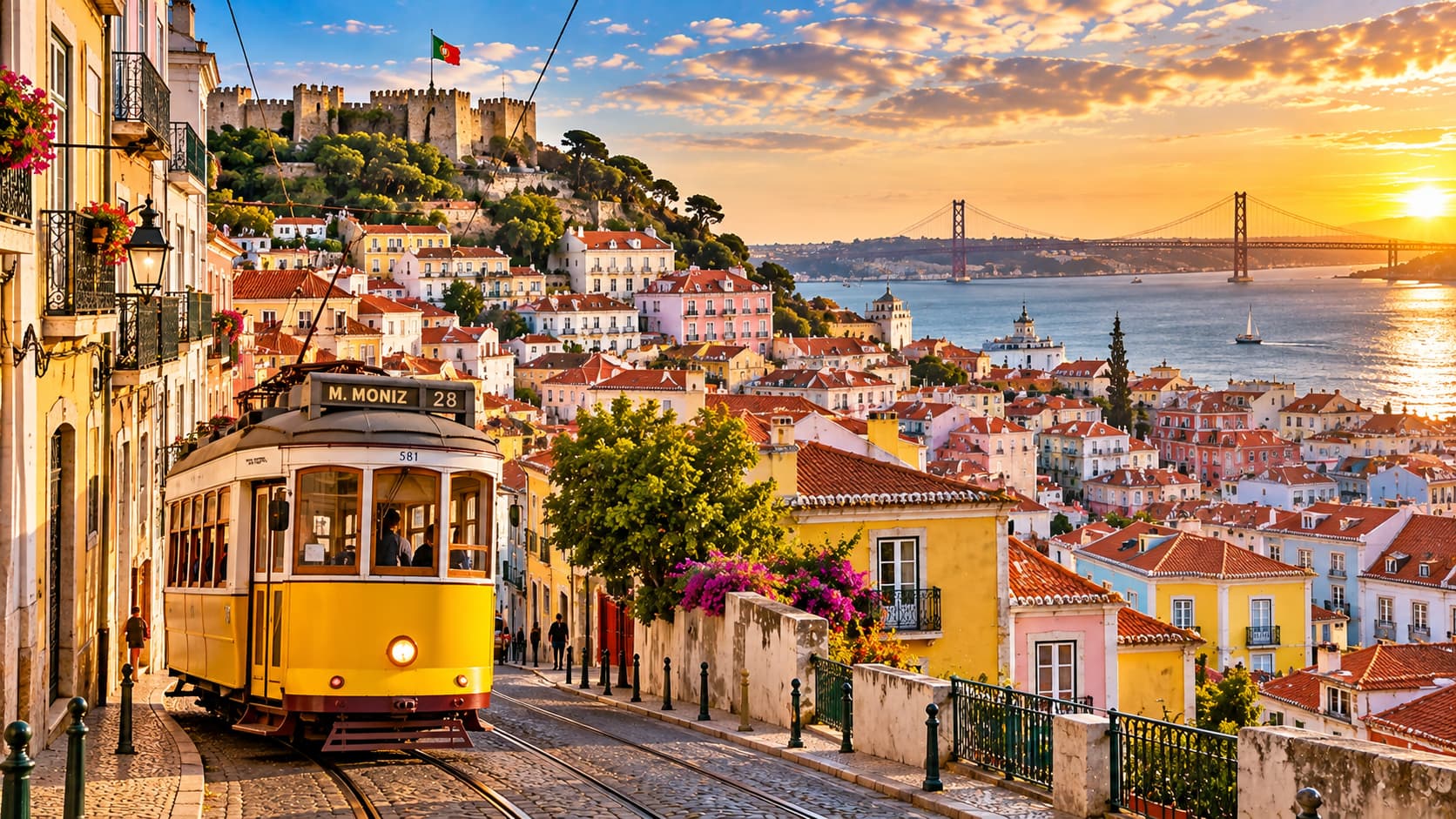
Built across a series of hills near Portugal’s Atlantic coast, Lisbon combines maritime heritage with vibrant neighborhoods and a relaxed atmosphere.
The historic district of Belém celebrates Portugal’s Age of Exploration.
Here, Jerónimos Monastery displays magnificent Manueline architecture, while Belém Tower stands as a symbol of the country’s maritime achievements.
The neighborhood is also famous for pastéis de nata, Portugal’s delicious custard tarts.
In Alfama, Lisbon’s oldest and most atmospheric neighborhood, narrow cobblestone lanes wind between tiled houses, churches, and small squares.
São Jorge Castle rises above the district, providing spectacular views across the city’s red rooftops and the Tagus River.
Another classic Lisbon experience is riding Tram 28, which travels through several historic neighborhoods and climbs some of the capital’s steepest streets.
Praça do Comércio, a grand waterfront square surrounded by elegant yellow buildings, is another architectural highlight.
After sunset, Lisbon’s traditional fado music fills intimate restaurants and bars, especially around Alfama and Bairro Alto.
Whether you’re admiring patterned tiles, enjoying a river viewpoint, or wandering through colorful streets, Lisbon offers countless memorable moments.
Best things to do in Lisbon: Visit Belém Tower, explore Jerónimos Monastery, ride Tram 28, discover Alfama, and enjoy panoramic views from São Jorge Castle.
9. Vienna, Austria – Imperial Elegance and Classical Music
Vienna is one of Europe’s most elegant capitals, renowned for its imperial palaces, magnificent architecture, classical music, and historic coffeehouse culture.
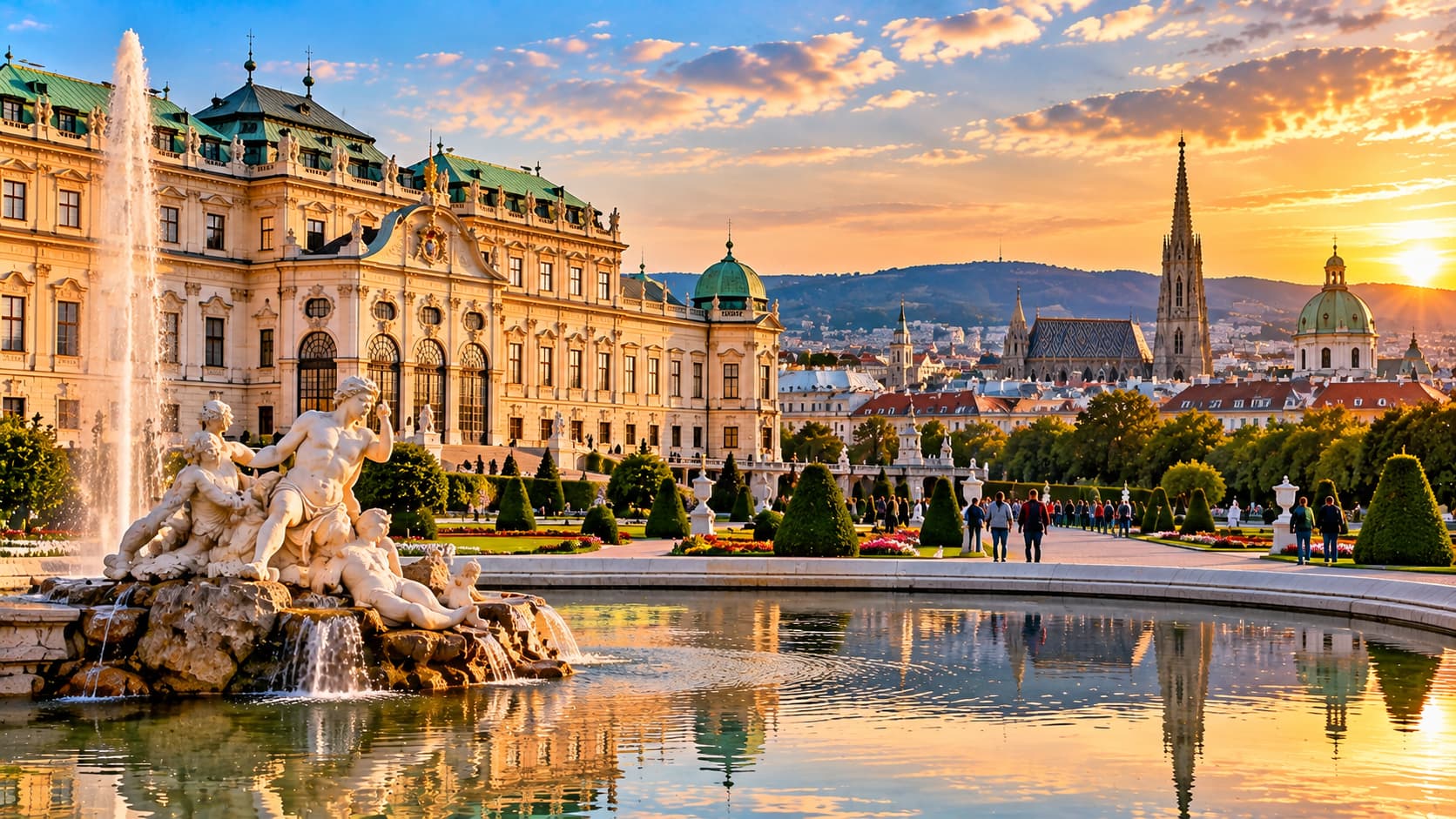
Once the center of the powerful Habsburg Empire, Austria’s capital preserves a remarkable collection of royal landmarks and cultural institutions.
In the historic center, St. Stephen’s Cathedral dominates the skyline with its impressive Gothic tower.
Nearby, the Hofburg Palace introduces visitors to Vienna’s imperial history through its royal apartments, museums, and magnificent courtyards.
The palace complex is also associated with the famous Spanish Riding School.
Schönbrunn Palace is another must-see attraction. This extraordinary royal residence features luxurious interiors, landscaped gardens, fountains, and panoramic viewpoints.
The Baroque Belvedere Palace is equally impressive, housing an outstanding art collection that includes Gustav Klimt’s celebrated painting The Kiss.
Vienna’s musical heritage is legendary.
Mozart, Beethoven, Schubert, and Strauss all contributed to the city’s cultural identity. Today, visitors can experience this tradition at prestigious venues such as the Vienna State Opera and Musikverein.
Traditional Viennese coffeehouses provide a quieter cultural experience, inviting guests to enjoy coffee, cakes, and leisurely conversations.
The lively Naschmarkt offers a diverse range of local and international foods, while the Prater is famous for its historic giant Ferris wheel.
Vienna remains a city where imperial traditions and modern European life blend beautifully.
Best things to do in Vienna: Explore Schönbrunn Palace, visit Hofburg Palace, admire St. Stephen’s Cathedral, discover Belvedere Palace, and experience a classical music performance.
8. Prague, Czech Republic – A Fairytale City of Gothic Towers
Prague is among Europe’s most beautiful historic cities, famous for its Gothic towers, medieval bridges, colorful buildings, and magnificent castle complex.
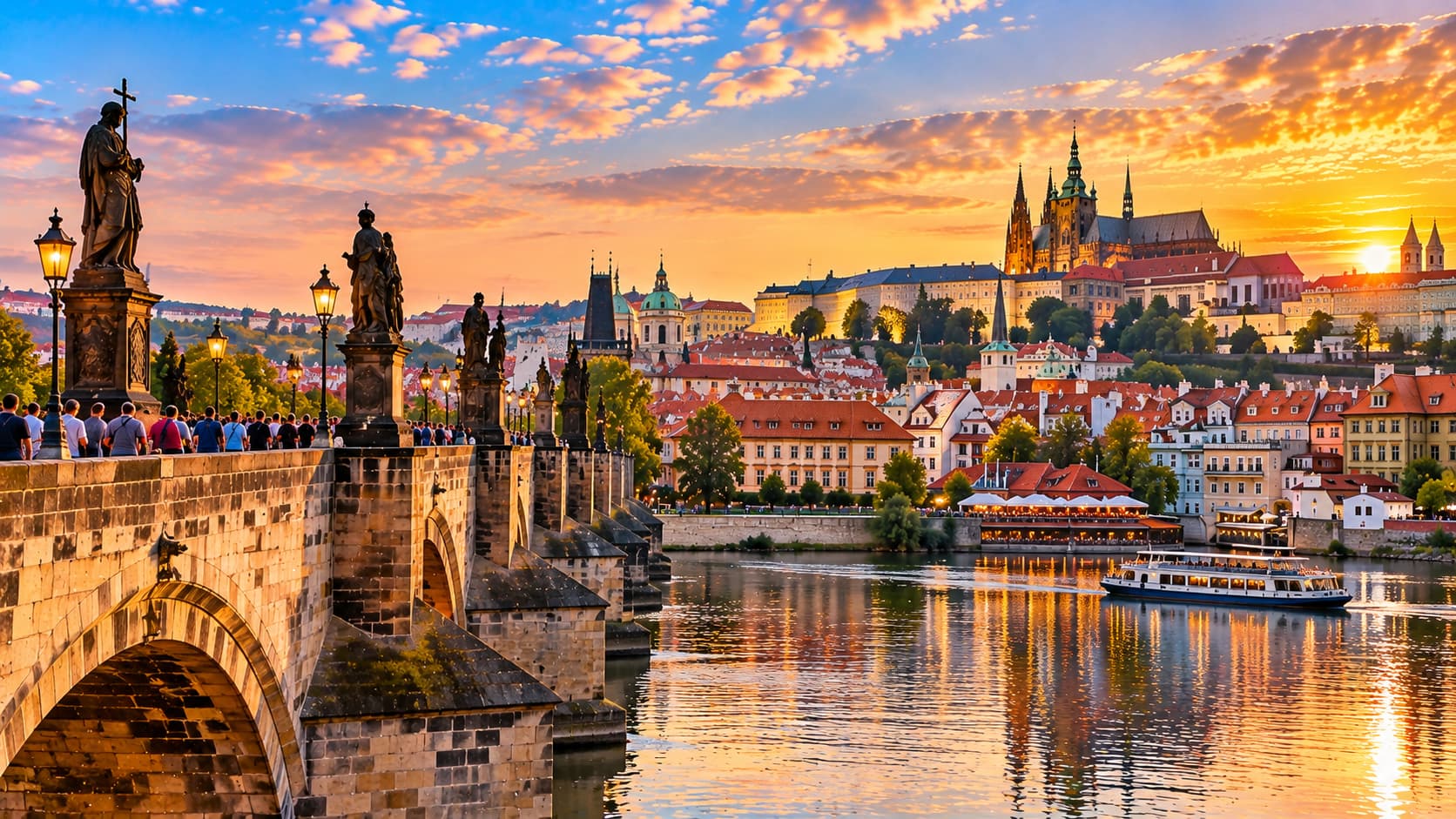
Located along the Vltava River, the Czech capital has preserved an extraordinary architectural heritage spanning many centuries.
The city’s historic heart is Old Town Square, where colorful facades surround the Gothic Church of Our Lady before Týn and the famous Prague Astronomical Clock.
Nearby, Charles Bridge crosses the Vltava River, decorated with historic statues and offering spectacular views toward Prague Castle.
On the opposite bank, the charming streets of Malá Strana climb toward the enormous Prague Castle complex.
Within the castle grounds, St. Vitus Cathedral impresses visitors with its soaring Gothic architecture, while Golden Lane offers a glimpse into the area’s historic character.
Prague’s Jewish Quarter preserves important synagogues and the Old Jewish Cemetery, reflecting the city’s rich and complex cultural history.
For panoramic views, Petřín Hill provides peaceful gardens and excellent perspectives over the historic skyline.
Traditional Czech restaurants, historic beer halls, riverside cafés, and classical concerts add to Prague’s appeal.
The city becomes especially magical after sunset, when illuminated towers reflect in the river and streetlights brighten its cobbled lanes.
Best things to do in Prague: Walk across Charles Bridge, explore Prague Castle, visit Old Town Square, discover the Jewish Quarter, and admire the skyline from Petřín Hill.
7. Milan, Italy – Fashion, Art, and Renaissance Masterpieces
Milan is Italy’s capital of fashion and design, but this sophisticated northern Italian city offers far more than luxury boutiques and stylish shopping streets.
Its remarkable combination of Gothic architecture, Renaissance art, historic canals, and modern skyscrapers makes Milan one of Europe’s most exciting urban destinations.
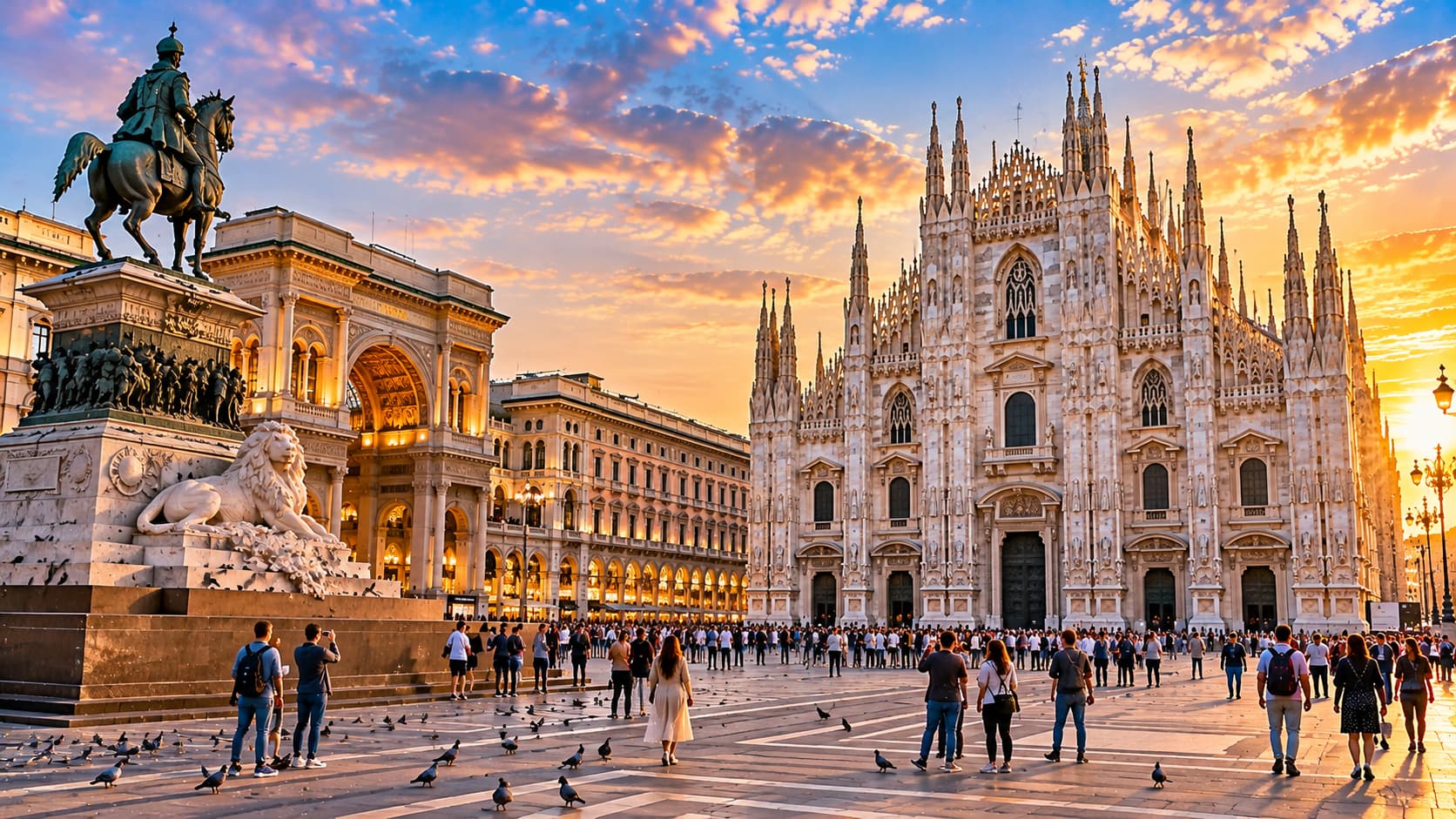
The city’s most famous attraction is Milan Cathedral, commonly known as the Duomo di Milano.
This magnificent Gothic masterpiece features thousands of sculptures, elaborate marble details, and soaring spires. Visitors can explore its rooftop terraces for spectacular views across the city.
Beside the cathedral stands the Galleria Vittorio Emanuele II, a breathtaking 19th-century shopping arcade decorated with mosaics, elegant archways, and a magnificent glass roof.
Art lovers should not miss Leonardo da Vinci’s The Last Supper, preserved in the complex of Santa Maria delle Grazie.
Sforza Castle is another major attraction, offering museums, historical collections, and a fascinating connection to Milan’s Renaissance heritage.
For a different atmosphere, head to the Navigli district, where historic canals are lined with restaurants, galleries, and lively evening terraces.
Meanwhile, Porta Nuova showcases Milan’s contemporary architecture, including striking modern towers.
Milan’s unique charm lies in the contrast between artistic tradition and modern innovation. Medieval churches, Renaissance masterpieces, designer boutiques, and futuristic buildings coexist within this dynamic Italian city.
Best things to do in Milan: Visit Milan Cathedral, explore Galleria Vittorio Emanuele II, admire The Last Supper, discover Sforza Castle, and enjoy an evening beside the Navigli canals.
6. Madrid, Spain – Royal Palaces and Vibrant Spanish Culture
Madrid, the capital of Spain, is famous for its magnificent royal architecture, world-class museums, lively public squares, and unforgettable culinary experiences.
Located near the geographical center of Spain, Madrid offers a vibrant cultural atmosphere that continues long after sunset.
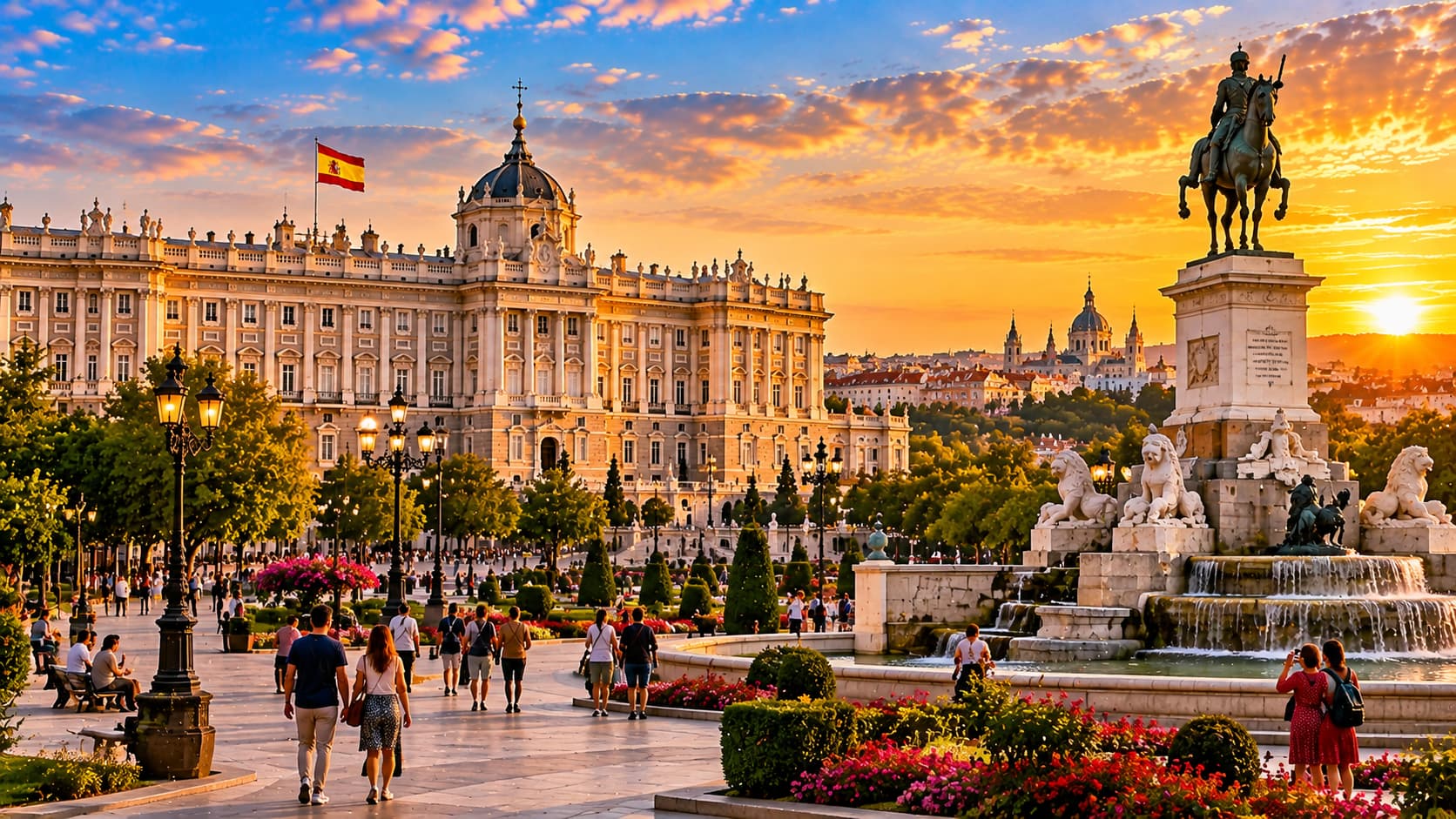
One of its most impressive attractions is the Royal Palace of Madrid, an enormous royal residence featuring lavish interiors and centuries of Spanish history.
Nearby, Plaza Mayor is surrounded by elegant red buildings and historic arcades, while Puerta del Sol remains one of the city’s busiest gathering places.
Madrid is also a paradise for art enthusiasts.
The Prado Museum houses extraordinary masterpieces by artists such as Diego Velázquez and Francisco Goya.
Together with the Reina Sofía Museum and Thyssen-Bornemisza Museum, it forms Madrid’s celebrated Golden Triangle of Art.
For a relaxing break from sightseeing, El Retiro Park offers landscaped gardens, tree-lined paths, monuments, and a beautiful boating lake.
Madrid’s neighborhoods reveal the city’s energetic personality.
La Latina is known for traditional tapas bars and historic streets, while Malasaña attracts visitors with independent shops, cafés, and lively nightlife.
Food is an essential part of the Madrid experience. Travelers can enjoy jamón, croquettes, calamari sandwiches, churros, and countless varieties of tapas.
As evening arrives, outdoor terraces fill with locals and visitors, and the city’s plazas become vibrant social gathering places.
Best things to do in Madrid: Tour the Royal Palace, explore Plaza Mayor, visit the Prado Museum, relax in El Retiro Park, and discover traditional tapas bars.
5. Amsterdam, Netherlands – Picturesque Canals and Artistic Treasures
Amsterdam is one of Europe’s most distinctive capitals, celebrated for its picturesque canals, historic merchant houses, world-famous museums, and bicycle-friendly streets.
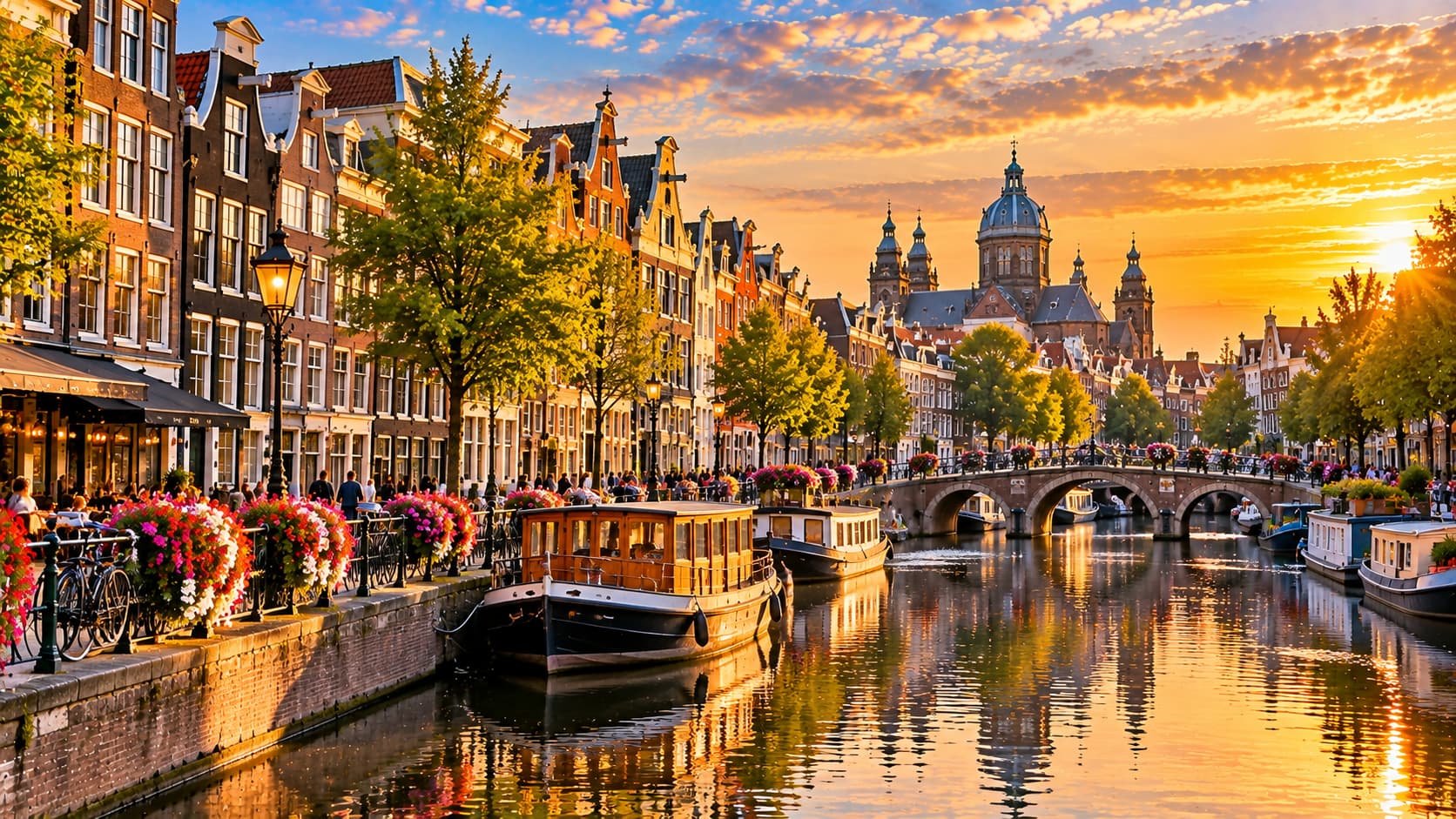
Despite its international reputation, the Dutch capital maintains a charming and intimate atmosphere.
Amsterdam’s historic canal ring was developed largely during the 17th-century Dutch Golden Age and is now recognized as a UNESCO World Heritage Site.
The famous Herengracht, Keizersgracht, and Prinsengracht canals wind past elegant buildings, houseboats, charming cafés, and countless bridges.
A canal cruise offers one of the best ways to appreciate Amsterdam’s architectural beauty.
Art plays an important role in the city’s cultural identity.
The Rijksmuseum displays extraordinary Dutch masterpieces, including works by Rembrandt and Vermeer.
The Van Gogh Museum houses the world’s largest collection of works by Vincent van Gogh, making it an essential stop for art enthusiasts.
Nearby, Museumplein provides a spacious cultural district surrounded by major institutions.
The Anne Frank House offers a moving insight into the experiences of Anne Frank and her family during the Second World War.
Beyond the famous museums, the Jordaan neighborhood charms visitors with peaceful canals, independent boutiques, galleries, and traditional cafés.
Amsterdam is also an excellent destination for cycling, exploring local markets, and enjoying green parks.
During spring, the wider Netherlands becomes famous for its spectacular tulip displays.
Whether you’re cruising along a canal or wandering across historic bridges, Amsterdam rewards travelers who take time to enjoy its slower moments.
Best things to do in Amsterdam: Take a canal cruise, visit the Rijksmuseum, explore the Van Gogh Museum, discover the Anne Frank House, and wander through Jordaan.
4. Barcelona, Spain – Gaudí Architecture and Mediterranean Beaches
Barcelona is one of Europe’s most exciting coastal cities, combining extraordinary architecture, Mediterranean beaches, historic neighborhoods, and a vibrant Catalan identity.
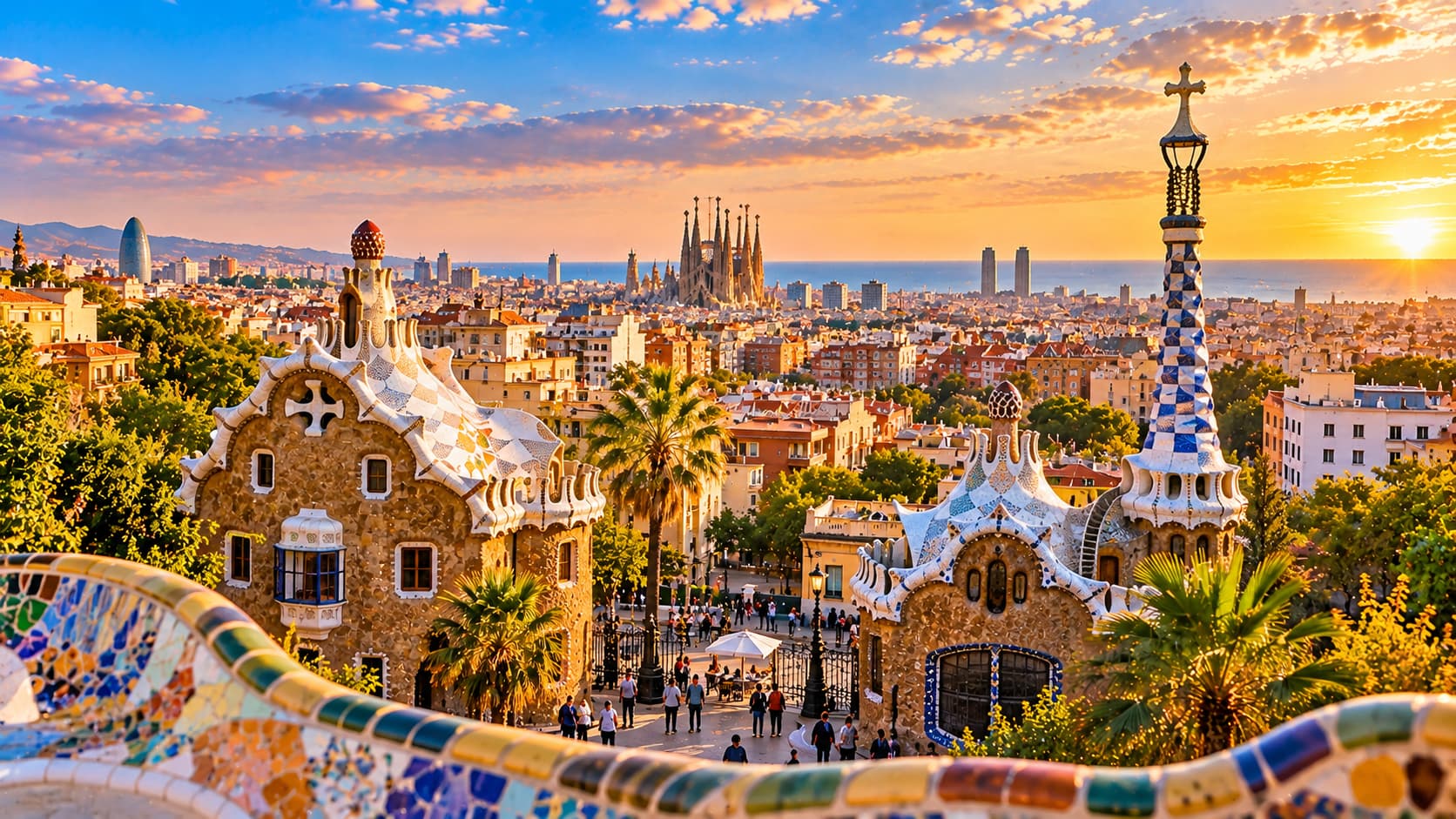
As the capital of Catalonia, Barcelona offers an unforgettable blend of artistic creativity, cultural heritage, and seaside relaxation.
The city’s most iconic attraction is La Sagrada Família, Antoni Gaudí’s extraordinary basilica.
Its intricate facades, towering spires, and colorful stained-glass windows create one of the most remarkable architectural experiences in Europe.
Gaudí’s imagination can also be admired at Park Güell, Casa Batlló, and Casa Milà, also known as La Pedrera.
Each landmark showcases the architect’s distinctive use of flowing forms, imaginative structures, and colorful decorative details.
Barcelona’s Gothic Quarter reveals another side of the city.
Its narrow medieval streets lead to historic squares, Roman remains, charming shops, and Barcelona Cathedral.
Nearby, La Rambla connects the city center with the waterfront, passing busy pedestrian areas and lively attractions.
La Boqueria Market is a popular destination for exploring fresh seafood, colorful produce, cured meats, and traditional Catalan ingredients.
For beach lovers, Barceloneta provides sandy shores, waterfront promenades, and excellent seafood restaurants.
Montjuïc offers another perspective, with gardens, museums, historic sites, and panoramic views across the harbor.
Barcelona’s unique appeal comes from the ease with which visitors can experience Gothic history, spectacular modernist architecture, and Mediterranean beach life in a single day.
Best things to do in Barcelona: Visit La Sagrada Família, explore Park Güell, wander through the Gothic Quarter, discover La Boqueria Market, and relax at Barceloneta Beach.
3. Rome, Italy – The Eternal City of Ancient Wonders
Rome is one of the world’s most extraordinary historical destinations, where ancient ruins, Renaissance masterpieces, magnificent fountains, and lively Italian neighborhoods exist side by side.
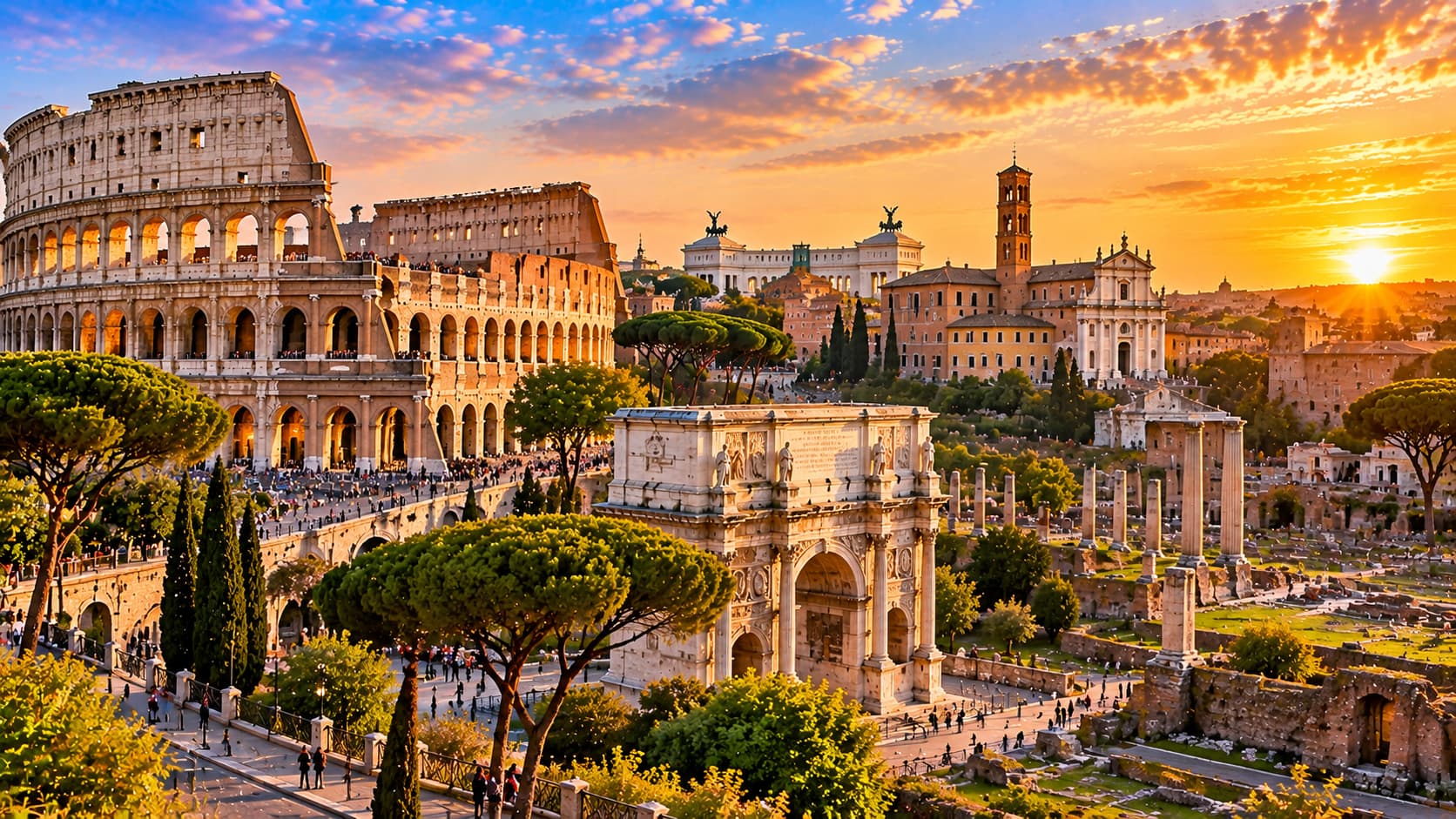
Known as the Eternal City, Italy’s capital preserves more than two thousand years of history within its streets and public squares.
The Colosseum is Rome’s most famous ancient monument, recalling the gladiatorial spectacles of the Roman Empire.
Nearby, the Roman Forum and Palatine Hill reveal the remains of temples, government buildings, and imperial residences that once formed the heart of ancient Rome.
The Pantheon is another remarkable landmark, celebrated for its enormous ancient dome and exceptional architectural preservation.
At the Trevi Fountain, visitors gather to admire the elaborate Baroque sculptures and flowing water.
The Spanish Steps connect elegant historic streets, while Piazza Navona is famous for its magnificent fountains, architecture, and lively atmosphere.
Within Rome lies Vatican City, home to some of the world’s most significant religious and artistic treasures.
St. Peter’s Basilica and St. Peter’s Square are major landmarks, while the Vatican Museums contain extraordinary collections, including Michelangelo’s famous Sistine Chapel ceiling.
Beyond its monuments, Rome offers charming neighborhoods such as Trastevere, where narrow cobbled streets and traditional trattorias create an inviting atmosphere.
Roman cuisine is another essential part of the experience, with pasta, pizza, and regional specialties served throughout the city.
Rome’s greatest beauty lies in how naturally ancient history remains connected to everyday Italian life.
Best things to do in Rome: Explore the Colosseum, visit the Roman Forum, admire the Pantheon, toss a coin into Trevi Fountain, and discover Vatican City.
2. Paris, France – The City of Light and Timeless Romance
Paris is one of the world’s most celebrated travel destinations, famous for its romantic atmosphere, monumental architecture, world-class art, elegant boulevards, and exceptional cuisine.
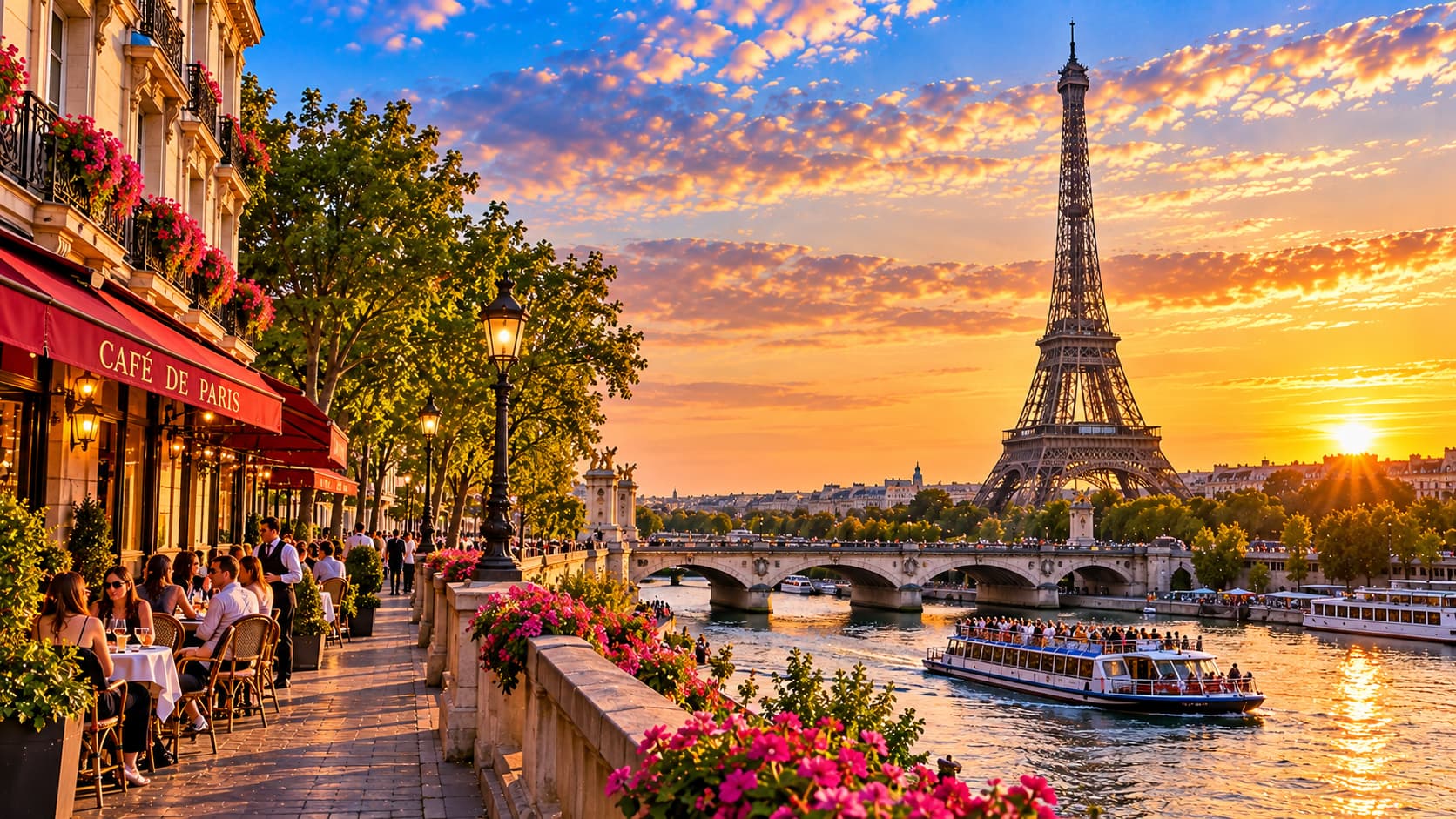
Stretching along the River Seine, the French capital offers countless opportunities to experience European culture and history.
The city’s most recognizable landmark is the Eiffel Tower, rising above the Champ de Mars and illuminating the skyline after dark.
The Louvre Museum, housed in a former royal palace, contains one of the world’s greatest collections of art and historical treasures.
On the Île de la Cité, Notre-Dame Cathedral stands as a masterpiece of Gothic architecture and an important symbol of Parisian heritage.
Yet Paris is equally enchanting beyond its famous monuments.
In Montmartre, picturesque streets climb toward the white domes of Sacré-Cœur Basilica, passing charming cafés, artists, and historic apartment buildings.
The Latin Quarter is celebrated for its bookshops, universities, and intellectual atmosphere.
Le Marais combines elegant historic mansions with boutiques, galleries, restaurants, and lively streets.
French cuisine is inseparable from the Paris experience.
Traditional bakeries fill the mornings with the aroma of croissants and baguettes, while neighborhood markets showcase cheeses, fresh produce, and regional specialties.
Small bistros and cafés invite visitors to slow down and enjoy the city’s culinary traditions.
Walking beside the Seine is another unforgettable experience, with historic bridges, riverside bookstalls, gardens, and beautiful architecture appearing around every corner.
Paris is more than a collection of famous attractions. Its greatest charm lies in the atmosphere of its neighborhoods and the simple pleasure of exploring them.
Best things to do in Paris: Visit the Eiffel Tower, explore the Louvre, admire Notre-Dame Cathedral, discover Montmartre, and enjoy a leisurely walk along the Seine.
1. London, United Kingdom – Royal Heritage and Modern British Culture
London is one of the world’s greatest urban destinations, combining royal traditions, iconic landmarks, world-class museums, multicultural neighborhoods, and a constantly evolving skyline.
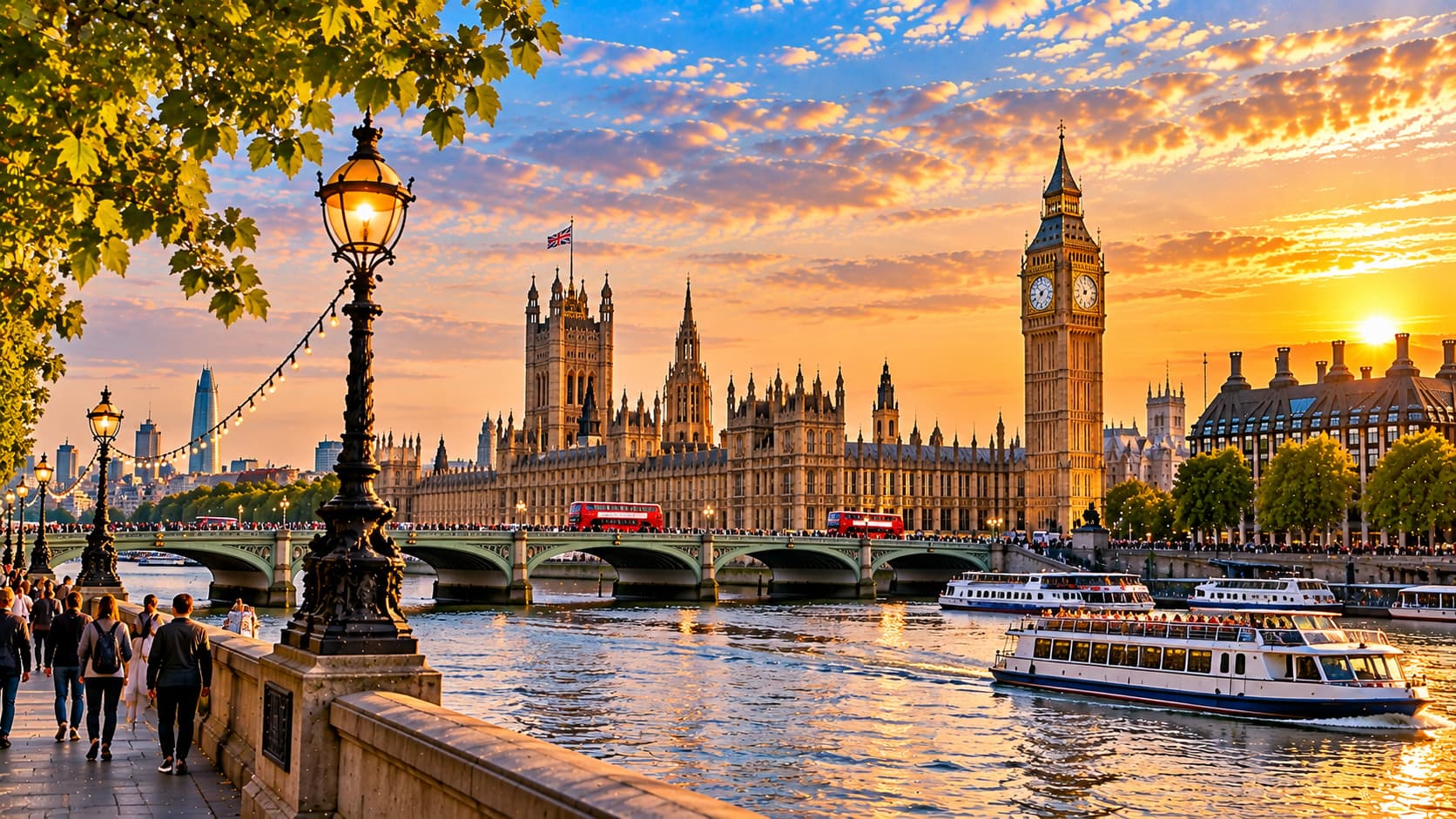
Situated along the River Thames, the British capital has nearly two thousand years of history and remains one of Europe’s most influential cultural centers.
The historic district of Westminster contains several of London’s most recognizable attractions.
Big Ben rises beside the Houses of Parliament, while Westminster Abbey has hosted royal coronations for centuries.
Nearby, Buckingham Palace remains one of Britain’s most famous royal residences, attracting visitors interested in the country’s monarchy and ceremonial traditions.
The London Eye provides spectacular panoramic views over the Thames and central London.
Farther east, the Tower of London preserves centuries of royal history and houses the famous Crown Jewels.
Tower Bridge, with its distinctive twin towers, is another iconic symbol of the capital.
London’s neighborhoods each offer a different atmosphere.
Covent Garden is known for its historic market buildings, street performers, and lively entertainment.
Soho attracts visitors with its restaurants, theaters, and nightlife, while Notting Hill charms travelers with colorful houses and the famous Portobello Road Market.
London is also home to extraordinary cultural institutions.
The British Museum and National Gallery contain internationally significant collections, while the West End is celebrated for its theater productions.
Beyond the famous attractions, London offers beautiful parks, historic pubs, global cuisine, and a remarkable blend of traditional and contemporary British culture.
Every neighborhood reveals another dimension of this endlessly fascinating city.
Best things to do in London: Visit Big Ben and Westminster Abbey, see Buckingham Palace, explore the Tower of London, admire Tower Bridge, and discover the city’s museums and neighborhoods.
Best Time to Visit Europe’s Most Popular Cities
Choosing the right season can make a significant difference to your European city break.
| Season | Months | Travel experience |
|---|---|---|
| Spring | March–May | Pleasant temperatures, blooming gardens, and excellent sightseeing conditions in many cities |
| Summer | June–August | Long daylight hours, outdoor festivals, beach activities, and busy tourist attractions |
| Autumn | September–November | Cooler weather, colorful foliage, and often fewer visitors than peak summer |
| Winter | December–February | Christmas markets, festive decorations, indoor cultural attractions, and atmospheric historic streets |
For many travelers, April to June and September to October offer an appealing balance of weather and sightseeing opportunities. However, the ideal time depends on the destination and the experiences you prefer.
Frequently Asked Questions About the Most Visited Cities in Europe
What are the most famous cities to visit in Europe?
London, Paris, Rome, Barcelona, Amsterdam, and Venice are among Europe’s best-known tourist destinations. Each offers iconic landmarks, cultural experiences, and distinctive architecture.
Which European city is best for history lovers?
Rome and Athens are outstanding destinations for ancient history. Prague, Vienna, Berlin, and London also offer remarkable historical attractions representing different periods of European civilization.
What is the most romantic city in Europe?
Paris and Venice are particularly famous for romantic experiences. Paris offers elegant boulevards, riverside walks, and intimate cafés, while Venice enchants visitors with gondolas, historic bridges, and atmospheric canals.
Which European cities are best for art and architecture?
Paris, Rome, Florence, Barcelona, Vienna, Amsterdam, and Milan are excellent choices for art and architecture enthusiasts. Among the cities featured in this guide, Paris, Rome, Barcelona, Vienna, Amsterdam, and Milan offer especially notable collections and landmarks.
Which European cities are best for food lovers?
Rome, Barcelona, Madrid, Paris, Lisbon, and Munich are excellent destinations for exploring regional European cuisine, from Italian pasta and Spanish tapas to French pastries and Bavarian specialties.
Can you visit several European cities on one trip?
Yes. Europe’s extensive rail networks and international flight connections make multi-city itineraries possible. Travelers can combine nearby destinations, such as Munich and Vienna or Amsterdam and Paris, depending on their schedule and interests.
Final Thoughts: Discover the Best Cities in Europe
From the imperial grandeur of Vienna and the medieval charm of Prague to the romantic canals of Venice and the spectacular landmarks of London, Europe’s cities offer an incredible diversity of travel experiences.
Every destination on this list has its own personality, shaped by centuries of history, architecture, food, art, and local traditions.
Whether you’re planning your first European vacation or returning to discover new places, these 15 famous cities provide inspiration for an unforgettable journey.
The beauty of exploring Europe is that no two cities feel exactly alike. Each destination reveals a different perspective on the continent’s extraordinary heritage and modern culture.
Start planning your European adventure and discover the cities that make this continent one of the world’s most fascinating travel destinations.
Have any thoughts?
Share your reaction or leave a quick response — we’d love to hear what you think!
-
 0
-
 0
-
 0
-
 0
-
 0
-
 0